The Eternal City Transforms into a Wonder of Lights, Tradition, and Spirituality
Christmas in Rome is a one-of-a-kind experience, where the magic of the holiday season intertwines with two thousand years of history, art, and spiritual traditions. During the Christmas period, which runs from early December through Epiphany on January 6, the Italian capital transforms into an enchanted setting, lit up by millions of twinkling lights, alive with characteristic markets, artistic nativity scenes, and religious celebrations that draw faithful visitors from every corner of the world. Rome offers a perfect blend of the sacred and the secular, where Christian faith meets popular tradition, creating an atmosphere that warms the heart even on the coldest days of the Roman winter.
The Christmas Atmosphere: When Rome Becomes a Living Postcard
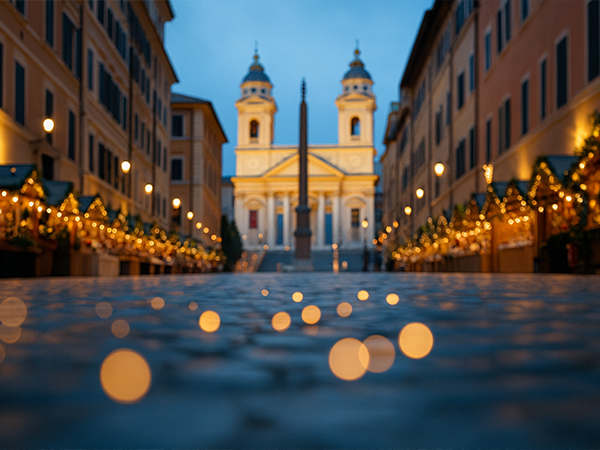
During Advent and throughout the Christmas season, Rome puts on its most splendid attire. The city's most celebrated shopping streets, such as Via del Corso stretching roughly fourteen hundred meters from Piazza Venezia to Piazza del Popolo, are lit up with spectacular Christmas lights that form a luminous tunnel through which visitors stroll while admiring the decorated shop windows. Via dei Condotti, the city's premier street of elegance and luxury, displays decorations curated by Maison Bulgari inspired by the tubogas motif, one of the brand's iconic designs. Piazza di Spagna is home to a majestic tree sponsored by the same brand, standing thirteen meters tall and weighing around four tons, illuminated by thousands of LED lights visible from a great distance.
The beating heart of Roman Christmas celebrations is undoubtedly Piazza San Pietro, where each year an imposing fir tree donated by various Italian regions is raised. The 2025 Christmas tree stands twenty-seven meters tall and was donated by the municipalities of Lagundo and Ultimo from the alpine Val d'Ultimo valley in Trentino-Alto Adige. Beside the tree stands the monumental nativity scene, also crafted each year by different Italian communities. This year's nativity comes from the province of Salerno, while past editions have featured scenes from Grado in Friuli Venezia Giulia, Sutrio in Carnia, and other towns that have brought their artistic and artisanal traditions to the heart of Christendom.
The inauguration ceremony of the tree and nativity scene, which typically takes place on December 7, is presided over by the leadership of the Governorate of Vatican City State and officially marks the beginning of the Christmas celebrations in the capital. From that moment through Epiphany, Piazza San Pietro becomes a continuous pilgrimage destination for faithful visitors who come to admire these Christmas symbols in the most evocative setting imaginable.
Christmas Markets: Tradition, Craftsmanship, and Flavors
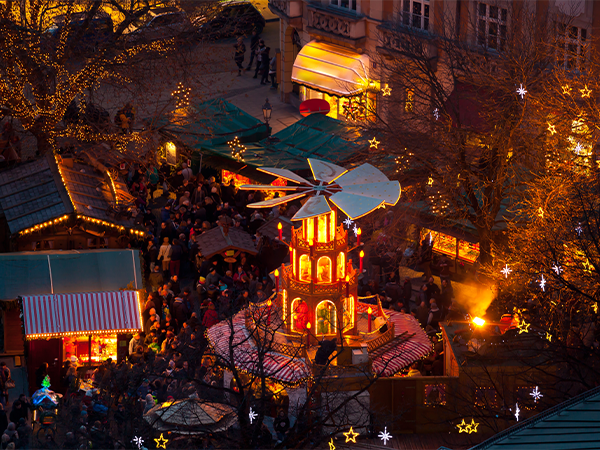
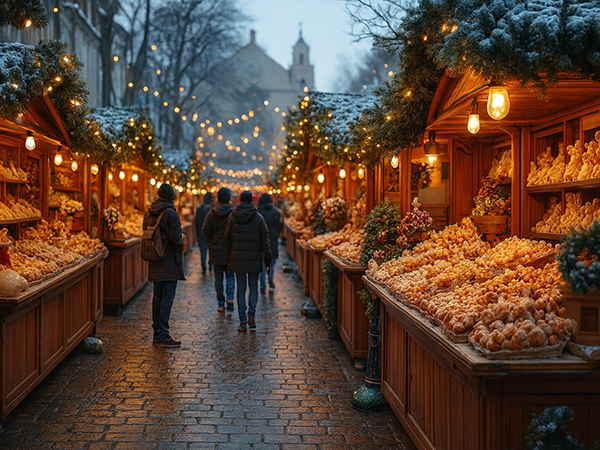
Christmas markets are among the most anticipated events for both Romans and tourists alike. The most iconic and traditional market is the one at Piazza Navona, a true institution of the city that runs from early December through January 6. This baroque square, with its monumental fountains including the famous Fountain of the Four Rivers by Bernini, fills with colorful stalls selling toys, traditional Christmas sweets, nativity scenes of every size and material, tree decorations, and handcrafted objects. The Piazza Navona market is especially beloved by children for its traditional carousels, puppet theater, and street performers who entertain crowds with impromptu shows.
Another highly appreciated market is the one at Villa Borghese, situated at the heart of one of Rome's most beautiful parks. From November 30 through January 6, the park lights up with festive lights and hosts stalls selling handcrafted products, handmade toys, traditional sweets, and gastronomic specialties. Strolling along the tree-lined avenues of Villa Borghese during the Christmas season, perhaps after visiting the Galleria Borghese with its masterpieces by Caravaggio and Bernini, offers a complete experience that blends art, nature, and tradition.
The Trastevere neighborhood, with its cobblestone alleyways and colorful facades, comes especially alive during the holidays. Family-run trattorias decorate their exteriors with lights and garlands, while small spontaneous markets pop up in the little squares where local artisans display their creations. The bohemian atmosphere of Trastevere, with its street artists, musicians playing at street corners, and lanterns illuminating the porticoes, creates a fairy-tale setting perfect for a cozy Christmas evening.
Nativity Scenes: Art, Faith, and a Millenary Tradition
Rome boasts an extraordinary nativity scene tradition with roots reaching back to the Middle Ages. The oldest and most precious nativity scene is in the Basilica of Santa Maria Maggiore: it is a masterpiece created by Arnolfo di Cambio in 1291, commissioned by Pope Nicholas IV, the first Franciscan to ascend the chair of Peter. The work comprises eight stone figurines depicting the Holy Family, the Three Kings, the ox, and the donkey. The basilica also preserves extraordinary relics connected to the Nativity: fragments of the Holy Cradle, traditionally believed to be from the manger that received the infant Jesus, and the panniculum, a portion of the swaddling cloths with which Mary wrapped the newborn.
The Basilica of Santa Maria Maggiore has a deep connection with Christmas. Built on the Esquiline Hill following the miraculous snowfall of August 5, 358, it was later dedicated as Santa Maria in Praesepium and an Oratory of the Nativity was constructed within it. For centuries, this place was considered the "Second Bethlehem" of the West, a pilgrimage destination for the faithful who came to venerate the relics of the Nativity.
Another historic nativity scene of great interest is the one at the Basilica of Santa Maria in Aracoeli, which houses in the Chapel of the Nativity a reproduction of the famous Capitoline Bambinello. The original, a wooden statue considered miraculous and venerated by Romans for centuries, was stolen in 1994 and never recovered. The current copy continues to draw devotees who come to pray and entrust their requests to the infant Jesus.
A tradition especially beloved by Romans is the Presepe dei Netturbini, an extraordinary work built entirely in masonry with lime by environmental workers from Roma AMA. Inaugurated in 1972 by an employee named Ianni, this nativity scene covers forty-five square meters and is composed of around three thousand stones from all over the world. The work recreates in minute detail the style of Palestinian buildings from two thousand years ago and can be visited free of charge by reservation through the municipal company's website.
Under Bernini's Colonnade in Piazza San Pietro, the International Exhibition "One Hundred Nativity Scenes in the Vatican" is held each year from December 8 through January 6. This exhibition brings together works created by artists from around the world who have expressed their creativity in depicting the Nativity using a wide variety of techniques, styles, and materials: paper, fabric, cork, wood, ceramics, mother-of-pearl. The 2025 edition displays one hundred and twenty-five nativity scenes from twenty-one different countries, including France, San Marino, Croatia, Poland, Germany, Hungary, the Czech Republic, Slovakia, Slovenia, Spain, the United States, Costa Rica, Venezuela, Brazil, Mali, Japan, the Philippines, Taiwan, and Paraguay. Entry is free and represents a unique opportunity to see how diverse cultures interpret the mystery of the Nativity.
Religious Celebrations: The Spiritual Heart of Roman Christmas
The most solemn and anticipated moment of Christmas in Rome is undoubtedly the Midnight Mass celebrated by the Pope in St. Peter's Basilica on Christmas Eve. This worldwide religious event typically begins around 9:30 PM and is accessible only through advance ticket reservations, which are quickly exhausted. For those who cannot enter the basilica, it is possible to follow the celebration live on large screens set up in Piazza San Pietro, creating a collective participatory experience surrounded by candlelight and singing.
Christmas 2025 takes on an even more special significance as it coincides with the beginning of the Jubilee, the Holy Year the Catholic Church celebrates every twenty-five years. On the night of December 24, Pope Francis will open the Holy Door of St. Peter's Basilica, officially inaugurating the Jubilee that will conclude on January 6, 2026. This extraordinary event attracts millions of pilgrims from around the world who wish to pass through the Holy Door to receive the plenary indulgence.
Rome's papal basilicas are adorned with monumental nativity scenes and luminous decorations. St. John Lateran, the cathedral of Rome and mother church of all churches in the world; Santa Maria Maggiore with its Nativity relics; and St. Paul Outside the Walls with its splendid mosaics host sacred music concerts, choral performances of Gregorian chants, and particularly solemn liturgical celebrations. The spiritual atmosphere in these places during the Christmas season offers visitors an experience that goes beyond religious tourism, becoming a moment of recollection and reflection.
Cultural Events and Shows: Christmas as a Total Experience
Rome's Christmas cultural calendar is packed with offerings for every taste and every age. The Opera House traditionally hosts The Nutcracker, Tchaikovsky's ballet masterpiece that tells the story of young Clara's adventures on Christmas night. This danced fairy tale continues to move generations of audiences with its immortal music and choreography that blends classical technique with fairy-tale storytelling.
The Auditorium Conciliazione, located a short distance from the Vatican, presents numerous Christmas shows including musicals, concerts, and theatrical performances. Among the regular fixtures is A Christmas Carol Musical, an adaptation of Charles Dickens's celebrated novel about the redemption of Ebenezer Scrooge, a family musical combining actors, singers, and a live orchestra. Another highly anticipated event is the Christmas Concert, now in its thirty-first edition, featuring international artists in pop, rock, soul, gospel, and opera accompanied by the Orchestra Italiana del Cinema.
For lovers of classical music and spirituality, numerous churches and basilicas host sacred concerts. The Museo Carlo Bilotti at Villa Borghese celebrates composers of the stature of Franz Liszt with concerts organized by the Roma Tre Orchestra in collaboration with the Sovrintendenza Capitolina. A particularly evocative experience is offered by the Candlelight concerts held at Palazzo Ripetta: Christmas classics are performed in a historic setting lit by hundreds of candles, creating a magical and intimate atmosphere.
Museums and the Christmas in the Museums Program
Roma Capitale promotes the Christmas in the Museums program every year, an initiative that enriches the cultural offering of the Civic Museums System with exhibitions, events, and educational activities for all ages. From December 21 through January 8, the city's museums offer themed guided tours, creative workshops for children, concerts, artistic performances, and special extended hours. The Capitoline Museums, with their extraordinary collection of ancient sculptures and pictorial masterpieces, offer free admission to residents of Rome and the metropolitan area during the holiday season.
The first Sunday of every month, including December 7 and January 4, Italian state museums open their doors free of charge to all visitors. This initiative allows cost-free visits to extraordinary places such as the Galleria Borghese with masterpieces by Caravaggio and Bernini, the National Roman Museum with its archaeological collections, or the Baths of Caracalla. For certain sites, such as those within the Colosseum Archaeological Park, advance reservations are not possible: free entry passes must be collected exclusively at the Arch of Titus ticket office, with potential lines on the busiest days.
A particularly popular attraction for families with children is the large-scale LEGO brick exhibition spread across fifteen hundred square meters right in the historic center, steps away from Piazza Venezia. The installation features a miniature universe composed of over twenty-five million colored bricks recreating monuments, cinematic scenes, and fantasy creations, offering an immersive experience that blends play, creativity, and architecture.
Culinary Traditions: The Flavors of Roman Christmas
Christmas is for Romans an occasion to celebrate gastronomic traditions rooted in centuries of history. Among the typical Christmas Eve dishes, stracciatella alla romana stands out: a comforting soup made with chicken broth, eggs, Parmesan, and nutmeg, served steaming hot as the first course of the dinner. Capitone, a large female eel, is fried or roasted according to the tradition that makes fish the star of the Christmas Eve meal on December 24.
On Christmas Day, the Roman table is enriched with heartier dishes. Homemade fettuccine with chicken giblets, roast capon stuffed with chestnuts and sausage, and oven-baked abbacchio with potatoes are the stars of the family lunch. Side dishes include puntarelle, a variety of chicory typical of Rome dressed with a garlic, anchovy, oil, and vinegar emulsion, and carciofi alla giudia, fried according to the tradition of the Jewish Ghetto.
Among the Christmas sweets, in addition to the Milanese panettone now widespread throughout Italy, Romans prepare pangiallo, a honey and dried fruit cake dating back to Roman times. According to legend, during the winter solstice gold-coated sweets were offered to the gods to propitiate the return of the sun. The modern pangiallo preserves this tradition with a golden glaze made from eggs and saffron. Other typical sweets include Apulian cartellate adopted by Lazio cuisine, almond and hazelnut torrone, and honey mustaccioli covered in chocolate.
Walking through the streets of the historic center during the Christmas season, the air fills with the scent of roasted chestnuts sold by street vendors, salt cod fritters frying in rosticcerias, and sweets displayed in historic pastry shops. Traditional trattorias offer special menus celebrating authentic Roman cuisine, allowing visitors to savor the dishes that Romans prepare in their own homes across generations.
Activities for Families and Children: A Child-Friendly Christmas
Rome offers numerous entertainment opportunities for families with children during the Christmas season. The Bioparco, the capital's zoo located within Villa Borghese, organizes special initiatives from December 26 through January 6 with educational activities about animals, nature-themed readings, and close encounters with certain species. Municipal libraries offer a rich program of Christmas readings, creative workshops, tombola games for adults and children, and shows with elves and acrobatic clowns.
Cinecittà World, the cinema theme park located on the southern outskirts of Rome, transforms during the holidays into a large Christmas Village. The park offers artificial snowfall on the main street, Santa's house where children can meet Santa Claus and take photographs, an ice skating rink surrounded by cinematic scenery, Santa's mailbox for sending letters to the North Pole, and a large Christmas musical featuring moving stories full of magic and hope.
Luneur Park, Rome's historic amusement park, celebrates Christmas with its twenty-two themed and decorated attractions, numerous live shows, continuous entertainment, and an ice skating rink. The Castello di Lunghezza hosts the Fantastic Castle of Santa Claus, an immersive experience where children can visit Santa's apartments, meet the Snow Fairy and the Toy Elves, watch theatrical shows, and take part in creative workshops to build Christmas decorations.
New Year's Eve in Rome: Welcoming the New Year in the Eternal City
Rome's New Year's Eve celebration is world-famous for the traditional New Year's Concert at Piazza del Popolo, where nationally and internationally renowned artists perform before tens of thousands of people. The event is broadcast live on television and radio and represents a moment of great collective celebration. At the stroke of midnight, the square lights up with a spectacular fireworks show that fills the Roman sky with color, while the crowd embraces and toasts to the new year.
Numerous venues, restaurants, and hotels organize New Year's Eve dinners with special menus, live music, and entertainment that runs through the night. The most renowned restaurants require reservations weeks in advance, but neighborhood trattorias also offer festive atmospheres and traditional menus at more accessible prices. Those who prefer celebrating outdoors can join the festivities at Piazza del Popolo or stroll along the Tiber admiring the reflections of the fireworks on the water.
On January 1, New Year's Day, many Romans take advantage of the relatively mild temperatures to stroll through historic parks or visit monuments, enjoying the lighter tourist crowds. Civic museums are open on holiday hours, allowing the new year to begin under the banner of culture and beauty.
Practical Tips for Getting the Most Out of Christmas in Rome
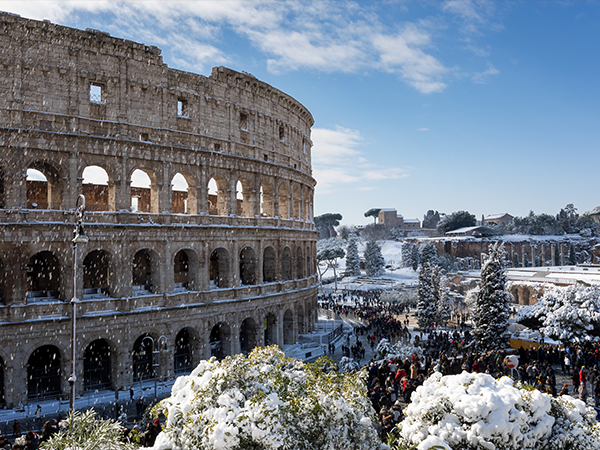
Rome's December climate is mild compared to Northern Europe, with daytime temperatures ranging between 8 and 12 degrees Celsius, while nights can drop to 3-5 degrees. Snow is rare but not impossible: when it falls, it transforms Rome into an even more enchanting fairy-tale scene. It is advisable to dress in layers to adapt to temperature fluctuations, carry an umbrella for possible rain, and wear comfortable shoes for walking on the cobblestones.
Public transportation during the holidays operates on reduced schedules: on December 25, the metro and trams run approximately from 8:30 AM to 1:00 PM and from 4:30 PM to 9:00 PM. Taxis can be hard to find on peak days, so it is advisable to stay in central areas reachable on foot or to book transfers in advance.
For attending the most popular events such as Midnight Mass at the Vatican or visiting iconic attractions, booking well in advance is essential to avoid disappointment. Many restaurants require reservations for special Christmas Eve and New Year's Eve dinners. While accommodation deals may be better in December than in summer, holiday meals and special events can cost more than usual, so it is worth checking menus and prices in advance.
Christmas in Rome is therefore a complete experience that combines spirituality, tradition, culture, gastronomy, and entertainment in a historical and artistic context unmatched anywhere in the world. Spending the holidays in the Eternal City means immersing yourself in unique atmospheres where the sacred meets the secular, where millennia of history dialogue with the contemporary, where every corner tells stories of faith, art, and humanity that have survived the centuries while keeping intact their power to move and amaze.