The Theaters of Rome
Rome is one of the most important and vibrant theatrical centers in Italy, boasting an extraordinarily rich cultural offering spread across more than two hundred spaces dedicated to the performing arts. The capital presents a theatrical landscape of remarkable variety, ranging from grand historic theaters to small experimental venues, from eighteenth-century palaces to contemporary buildings, creating a cultural fabric that is truly unique.
Teatro Argentina: The Heart of Rome's Theatrical Tradition
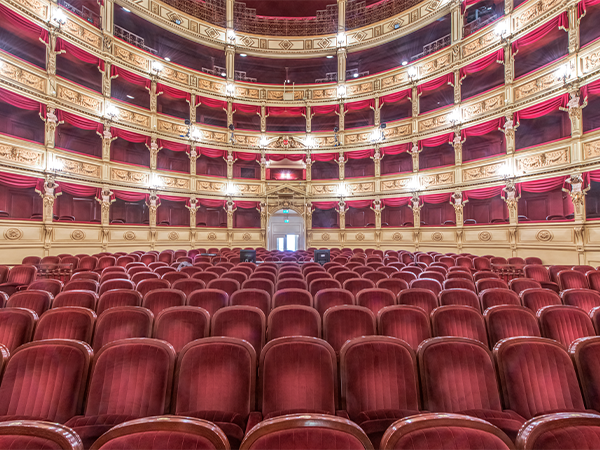
Teatro Argentina is the beating heart of Rome's theatrical scene. Inaugurated in 1732 at the behest of the Sforza Cesarini family, it stands on historically significant ground: the area where the Curia of Pompey once stood, the site of Julius Caesar's assassination. The original structure was designed by architect Gerolamo Theodoli, who created an entirely wooden building with the characteristic horseshoe shape, considered ideal for acoustics. The name derives from the medieval tower that belonged to Johannes Burckhardt, a bishop from Strasbourg, whose Latin name was Argentoratum. Over the centuries, this temple of culture hosted some of the most important world premieres in operatic history: the debut of Rossini's Barber of Seville in 1816, which was initially a notorious flop before becoming a triumph in subsequent performances, and several operas by Verdi, including the Battaglia di Legnano in 1849. Today it is part of the Fondazione Teatro di Roma along with the Teatro India and the Teatro Torlonia, maintaining a central role in the city's cultural programming.
Teatro dell'Opera: The Excellence of Italian Opera
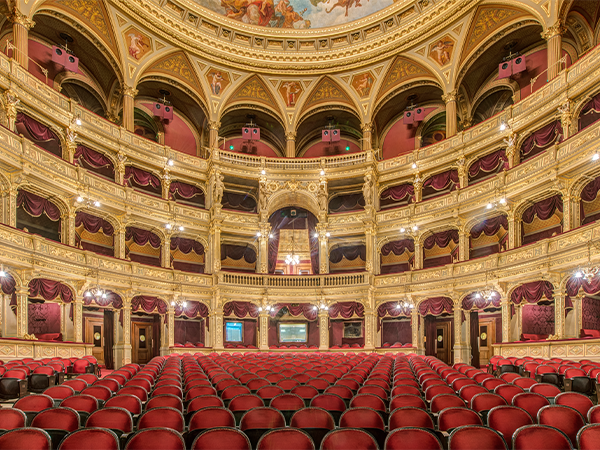
The Teatro dell'Opera, also known as Teatro Costanzi after its founder Domenico Costanzi, represents the operatic excellence of the capital. Inaugurated in 1880 in Neo-Renaissance style, the building was subsequently renovated in the 1920s with a Rationalist facade. The horseshoe-shaped interior, with a capacity of approximately 1,600 seats, provides exceptional acoustics. Legendary artists such as Enrico Caruso, Beniamino Gigli, Maria Callas, and Renata Tebaldi have performed on its stage, under the baton of maestros of the caliber of Toscanini and Abbado. A particularly fascinating feature is the summer season held at the Baths of Caracalla, where opera and ballet are performed against the evocative archaeological backdrop, creating a unique experience that fuses art with ancient history.
Teatro Sistina: The Home of Musical Comedy
Teatro Sistina is one of the most beloved institutions among Romans. Located between Piazza Barberini and Piazza di Spagna, it was inaugurated in the 1940s as a cinema-theater before dedicating itself exclusively to theatrical programming. Its success is inextricably linked to the duo of authors Garinei and Giovannini, who took over artistic direction in the 1960s and created some of the most celebrated musical comedies in Italian theatrical history, such as "Aggiungi un posto a tavola" and "Alleluja brava gente." With its 1,600 seats, the Sistina has seen great names of Italian entertainment perform on its stage: Toto, Marcello Mastroianni, Walter Chiari, Enrico Montesano, Gigi Proietti, and Mariangela Melato. It continues to maintain a program centered on musicals and musical comedies, cementing its reputation as a leading venue for this genre.
Teatro Brancaccio: Rome's Theater par Excellence
Teatro Brancaccio, located in the cosmopolitan Esquilino neighborhood between Santa Maria Maggiore and San Giovanni in Laterano, is affectionately considered "the theater of Rome." Inaugurated in 1916 under the name Teatro Morgana, it took its current name in the late 1930s in homage to the noble Brancaccio family. With over 1,300 seats spread across the stalls and gallery, this multi-purpose theater has hosted an extraordinary range of artists: from Toto, Anna Magnani, and Aldo Fabrizi to international music legends such as Jimi Hendrix, Louis Armstrong, Fabrizio De Andre, and even the Beatles. From 2001 to 2007, artistic direction was entrusted to Gigi Proietti, who worked to revitalize the venue. The complex also includes the Brancaccino, a 100-seat hall, spaces for theatrical training, and a large panoramic terrace.
Teatro Quirino Vittorio Gassman: A Gem in the Baroque City Center
Teatro Quirino Vittorio Gassman is a gem of Rome's Baroque city center. Its origins in 1871 border on the incredible: it was built entirely in wood in a single day at the behest of Prince Maffeo Barberini Colonna di Sciarra, who wanted to quickly take advantage of the Papal State's loss of control over the area. After opening with operetta and variety shows, it reopened in 1914 with an opera season directed by Pietro Mascagni. Giants of the Italian stage have performed here, including Eduardo De Filippo, Vittorio Gassman, Carmelo Bene, and Giorgio Strehler. Since 2004, the theater has borne the name of the great Mattatore as a tribute, and with its 850 seats it remains a premier cultural venue.
Globe Theatre: Shakespeare in Villa Borghese
The Globe Theatre in Rome offers a completely different theatrical experience. Set in the magnificent grounds of Villa Borghese, in Piazza di Siena, this theater faithfully replicates the structure of the famous Elizabethan playhouse in London where Shakespeare performed. Built entirely of wood and open to the sky, it operates only during the summer season from June to September, offering audiences the unique experience of immersing themselves in the atmosphere of Shakespearean London while in the green heart of the Italian capital.
Ambra Jovinelli: Art Nouveau and Variety Theater
The Ambra Jovinelli is a precious testament to the golden age of Italian variety theater. Built in 1909 in the Art Nouveau style at the initiative of impresario Giuseppe Jovinelli, this theater stands out as the only example of Art Nouveau architecture among Rome's theaters. Dedicated primarily to variety shows and comedy, it has faced difficult periods, including a devastating fire in 1982. Thanks to the protected status placed on its facade by the Ministry of Cultural Heritage, reconstruction was made possible, allowing the theater to return to hosting high-quality programming.
Other Historic and Contemporary Theaters
Teatro Valle, though not always operating with a continuous program, remains a place of great historic value. Located in the Sant'Eustachio district, it has served for centuries as a reference point for Rome's theatrical culture, hosting prestigious drama productions and opera performances.
Teatro India represents the contemporary dimension of the Fondazione Teatro di Roma. Located on Lungotevere Vittorio Gassman in the Portuense neighborhood, this space was once a decommissioned power plant before being converted into a theater, becoming a laboratory of experimentation and research for new forms of live performance, hosting innovative productions and contemporary work.
Teatro Olimpico, in the Flaminio neighborhood, and Teatro Palladium, in the Ostiense neighborhood connected to Roma Tre University, further enrich Rome's theatrical offering with programs ranging from drama to contemporary dance, from concerts to experimental shows.
The Wealth of Smaller Theaters and Alternative Spaces
Beyond the big names, Rome is home to dozens of smaller but no less important theaters: from the Teatro Eliseo to the Teatro della Cometa, from the Teatro Vascello to the Teatro Vittoria, each with its own artistic identity and loyal audience. This widespread presence makes Rome's theatrical scene accessible and diverse, able to satisfy all tastes - from classical productions to avant-garde experimentation, from musicals to solo performances, from dance to children's theater.
Rome's theatrical programming is not limited to traditional stages: many unconventional spaces host performances, from deconsecrated churches to historic palaces, from converted industrial buildings to gardens and courtyards, demonstrating how theater is an integral part of the city's urban and cultural fabric. This vitality and variety make Rome an essential destination for theater lovers, offering every evening of the year multiple opportunities to attend quality shows in locations that are often steeped in history and charm. Rome's theatrical tradition thus continues to renew itself, keeping alive the dialogue between past and present, between large productions and contemporary research, confirming the capital as one of Europe's most dynamic theatrical centers.