
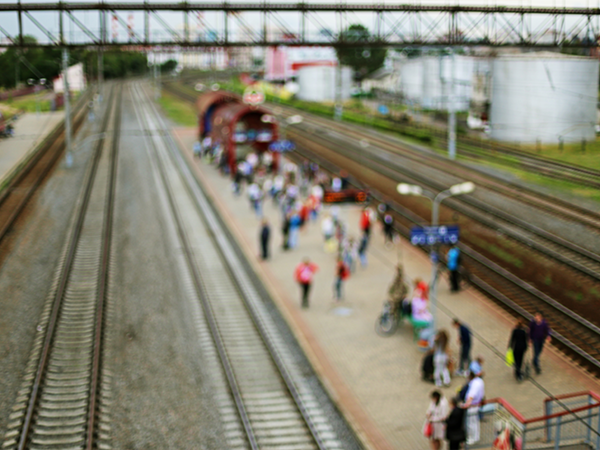
Vitinia Metromare Railway Station
Vitinia railway station is a key stop on the Rome-Lido line, now marketed commercially as the Metromare, which connects the capital's center to the Ostia coastline by running through the urban fabric of Rome's southwestern quadrant. Located in the IX Municipality on Via Copparo, this station is a vital mobility hub for residents, commuters, and visitors in the Vitinia neighborhood and surrounding areas.
History and Origins of the Station
Vitinia station has a century-old history rooted in the 1920s. It opened alongside the entire railway line on August 10, 1924, immediately becoming a defining factor in the area's urban and social development. An interesting historical detail concerns its original name: on the opening day's timetable, the station appeared as "Risaro," the name of the pre-World War I farming hamlet. Only after the war did the stop take on its current name of Vitinia, reflecting the neighborhood's evolving identity.
The hamlet that preceded modern Vitinia was predominantly rural, and the construction of the railway station contributed decisively to the transformation of the territory. The Risaro locality, where the railway sections between Ostia and central Rome were joined on August 30, 1922, stands as a symbolic point in the history of connections between the capital and its coastline.
During World War II, Vitinia station was fortunate enough to avoid serious damage, unlike other stops on the line that were heavily struck, particularly those on the stretch toward Acilia and the coast, where the Germans caused significant destruction. This allowed the station to retain part of its original structure and quickly resume service after the war.
Renovation and Current Configuration
The station's current appearance is the result of a major renovation carried out for the Jubilee of the Year 2000. This modernization work completely renewed the structures and facilities, significantly improving functionality, accessibility, and passenger comfort. Despite the full overhaul, the designers took care to preserve a historic building from the original 1920s station, thus retaining an architectural element of historical memory that bears witness to the railway line's origins.
Today, the station is a modern, functional surface stop, seamlessly integrated into the surrounding urban environment. Its location allows easy access for neighborhood residents and users from nearby areas, serving as an interchange point with the urban bus lines running through the area.
The Metromare Line: Features and Route
The railway line on which Vitinia station sits is one of the most important transit arteries for the capital's southwestern quadrant. Spanning 28.359 kilometers, the Metromare connects fourteen operational stations, passing through densely populated neighborhoods such as Tor di Valle, Vitinia itself, Acilia, Casal Bernocchi, Centro Giano, and Ostia Antica, before reaching the coastal stations of Ostia all the way to the terminus at Cristoforo Colombo.
The line is managed by the Lazio Region through ASTRAL, which oversees the infrastructure, and Cotral, which operates as the railway carrier. This management transition, effective July 1, 2022, also brought the commercial rebranding of the line under the Metromare name, emphasizing the railway's vocation of connecting Rome with its sea.
The line's distinctive feature is that, although it is a former concessionary railway, it effectively operates as a metro-style service, with the frequency and coverage typical of urban mass transit. The initial section of the route runs parallel to Rome's metro line B, on independent tracks, offering important interchange opportunities at Basilica San Paolo and Magliana, as well as at the terminus of Porta San Paolo-Piramide.
Service Frequencies and Timetables
Vitinia station benefits from regular rail service throughout the day. On weekdays, the first departures on the line begin at 5:15 a.m., ensuring connections for early-morning commuters. Due to ongoing infrastructure upgrade works on the line, the last evening trains currently run at 21:00, while on weekends the schedule is regularly extended until 23:30.
Train frequency during peak hours is designed to meet the area's mobility needs, with intervals that allow fast and efficient travel. The timetables have been calibrated to ensure optimal connections with the urban bus lines serving the station, creating an integrated local public transport network.
Strategic Importance for the Territory
Vitinia station's position along the Metromare line is strategically important for several reasons. The neighborhood sits at an intermediate point between central Rome and the coastline, acting as a link between the consolidated urban area and the more peripheral residential zones. For many local residents, the station is the primary access point to Rome’s public rail transport system.
The presence of the railway stop has historically shaped Vitinia's urban development, encouraging residential growth in surrounding areas and the emergence of commercial and public services nearby. The station acts as a draw for businesses, public establishments, and various services, contributing to the neighborhood's economic vitality.
Future Projects and Network Development
The future of mobility in the Vitinia area and along the Metromare line is the subject of major enhancement projects. In June 2023, a presidential decree allocated the resources needed to build two new stations on the line: Torrino-Mezzocammino, to be built between Tor di Valle and Vitinia, and Giardino di Roma. These new stops are expected to improve public transport accessibility once completed and opened to service.
In particular, the Giardino di Roma station will be built at the intersection of Via Domenico Modugno and Via Erminio Macario, featuring an innovative layout with two opposing buildings connected by a seven-meter underpass. The total cost of the project is estimated at five million euros, funded through the Piano Casa and the program agreement for the Giardino di Roma development. The opening of this new stop will ease the load on Vitinia station and offer an alternative for residents of the surrounding areas who currently must cross the area's characteristic hills to access rail transport.
Renovation works are also underway at several stations along the line, including Tor di Valle and Acilia Sud-Dragona, with the goal of improving structures, accessibility, and passenger services. These works are part of a broader plan to upgrade the entire Metromare line, aimed at increasing service reliability and the overall quality of the travel experience.
Connectivity and Intermodality
Vitinia station is part of an intermodal transport system that allows rail travel to be combined with other modes of transportation. The presence of urban bus stops in the immediate vicinity ensures widespread local connections with the surrounding residential areas and neighborhood services. This integration between different transport modes is essential for providing efficient and sustainable mobility in Rome's southwestern quadrant.
The station is therefore not just a transit point, but a genuine local mobility hub, where flows of people from different directions converge toward multiple destinations - from Rome's historic center to the beaches of Ostia, from the EUR commercial hubs to the outlying residential districts.