Entertainment

Birthday of Rome

April 21

The Birthday of Rome

A Millennial Celebration of the Eternal City

Every year on April 21, Rome celebrates its own birthday in one of the oldest and most fascinating festivities in Italian tradition. This occasion, known as Natale di Roma, is far more than a simple historical commemoration: it is a moment of cultural rebirth, civic pride, and deep connection with the roots of Western civilization. The date symbolically recalls the founding of the Eternal City, which according to tradition took place in the seventh century BC, specifically in the year 753, when the legendary Romulus is said to have traced with a plow the sacred furrow that marked the perimeter of the new city on the slopes of the Palatine Hill.

The determination of this date was not arbitrary, but derived from complex astronomical and historical calculations. The historian Marcus Terentius Varro, who lived during the era of Julius Caesar, established this chronology based on the length of the reigns of the seven kings of Rome and on astrological observations elaborated by the physicist and mathematician Lucius Tarutius Firmanus. The latter used sophisticated celestial computation methods to identify the exact day on which Romulus would have performed the founding act. From that moment arose the expression "Ab Urbe Condita," meaning "from the founding of the city," a dating system used by the Romans to indicate years before the adoption of the Gregorian calendar.

The founding myth interweaves history and legend in a story that has spanned millennia. According to the traditional narrative, Romulus and Remus were twin sons of the vestal virgin Rhea Silvia and the god Mars. Abandoned in a basket on the banks of the Tiber because of their illegitimate birth, they were saved and nursed by a she-wolf, then raised by the shepherd Faustulus and his wife Acca Larentia. When they became adults, the two brothers decided to found a city but came into conflict over the location and name. Romulus wanted to build it on the Palatine and call it Rome, while Remus preferred the Aventine and the name Remora. To settle the dispute they consulted the auspices by observing the flight of birds, but the conflict degenerated tragically when Remus, to mock his brother, jumped over the freshly traced sacred furrow. Romulus killed him with threatening words against anyone who dared violate the boundaries of his city. From this fratricide, Rome was born, taking its name from its founder.

Modern historiography offers a different perspective, suggesting that Rome was not founded through a single deliberate act, but grew from the gradual unification of small villages scattered across the seven hills. Archaeological excavations confirm the existence of settlements on the Palatine dating to the very period indicated by the legend, with traces of huts and a primitive boundary wall. This convergence between myth and archaeological fact makes the founding narrative even more fascinating, showing how legendary storytelling and historical fact can become inseparably intertwined.

The celebration of the Birthday of Rome has passed through several historical phases. In antiquity, April 21 coincided with the Parilia, pastoral festivities dedicated to the numen Pales, during which shepherds performed purification rites for their flocks to mark the beginning of the new year. The first emperor to officially celebrate the anniversary of the founding was Claudius in 47 AD. Over the following centuries, other emperors organized grand celebrations: Antoninus Pius around 147-148 AD, and Philip the Arab in 248 AD, when Rome celebrated its first millennium alongside the Ludi Saeculares.

With the fall of the Roman Empire and the spread of Christianity, the festival fell into oblivion for centuries. It was in the fifteenth century that the Roman Academy of Pomponius Laetus revived the celebration of Natale di Roma, in a context of renewed interest in classical antiquity. This circle of scholars even attempted to restore ancient pagan rites, with Pomponius Laetus assuming the title of pagan Pontifex Maximus. After a long period of discontinuity, the celebration was revived after 1870, with the Breach of Porta Pia, becoming a symbol of Risorgimento ideals and newly recovered national unity.

During the fascist period, Benito Mussolini's regime exploited the occasion for propaganda purposes. Starting from April 21, 1924, Natale di Roma became a national holiday, renamed "Natale di Roma - Festa del Lavoro." The regime abolished the celebration of May 1, transferring the workers' holiday to the capital's birthday in an attempt to link the values of labor to the supposed imperial grandeur of Rome. Only in 1945 was May 1 restored as the workers' holiday.

Today, Natale di Roma is organized primarily by the Gruppo Storico Romano, a cultural association founded in 1994 that is passionately dedicated to ancient historical reenactment. The association carries out an intense program of promotion and dissemination of all civic, cultural and religious aspects of ancient Rome, keeping alive the memory of Roman civilization's splendor and serving as a reference point for ancient history enthusiasts.

The festivities span several days, usually from April 19 to 23, transforming the Circus Maximus and other historic areas of the capital into a vast open-air theater. The program includes historical reenactments that bring to life mythological and historical episodes: the landing of Aeneas on the Latium coast, the encounter between the god Mars and Rhea Silvia, the discovery of the twins by the shepherd Faustulus, through to the climactic moment of the tracing of the furrow and the tragic fratricide of Remus. The vestal virgins open the ceremonies with the Commissio Feriarum, the ritual lighting of the sacred fire, while in the Circus Maximus area gladiatorial shows, demonstrations by Roman legions, ancient dances and theatrical performances follow in succession.

One of the most anticipated events is the grand historical procession held on Sunday, when approximately 1,600 to 3,000 reenactors from across Italy and Europe march along Via dei Fori Imperiali, starting from the Circus Maximus and passing through the symbolic landmarks of ancient Rome such as the Colosseum. Participants wear historically accurate costumes representing legionaries, senators, vestal virgins, gladiators and ordinary citizens, recreating an atmosphere that transports visitors back more than two millennia. The simulated battles between legionaries and barbarians represent the most spectacular moments, with choreographed combat displaying Roman military techniques.

During the days of celebration, civic museums and archaeological sites in Rome organize special openings, free or reduced-price guided tours, educational workshops for children and families, lectures and meetings with ancient history experts. The Teatro dell'Opera opens its doors for special guided tours, allowing visitors to discover the spaces of the capital's opera house with anecdotes about the composers and artists who frequented it. Numerous cultural venues extend their opening hours, while in squares and historic neighborhoods educational stands, photographic exhibitions of past editions and meetings with writers and scholars are set up.

A moment of particular wonder occurs at the Pantheon, where at exactly noon on April 21 a unique astronomical spectacle is renewed: a perfectly geometric beam of light enters through the oculus of the dome and illuminates precisely the bronze entrance door. This "miracle" was designed by Agrippa at the behest of Emperor Augustus, who wished to be bathed in sunlight on the birthday of his city, appearing thus illuminated by divine light before his citizens.

Natale di Roma is therefore far more than a historical commemoration: it is a moment of cultural identity, an opportunity for Romans to reconnect with their millennial roots and for visitors to immerse themselves in the atmosphere of the ancient imperial capital. The festival attracts thousands of tourists and history enthusiasts every year who come from all over the world to attend the reenactments and join in the celebrations. Historic center restaurants offer traditional menus with classic Roman dishes, while neighborhoods such as Trastevere take on a special atmosphere, filled with aromas and flavors that evoke the conviviality of ancient Rome.

In 2024, the 2,777th birthday of Rome was celebrated, with the participation of Italian institutional representatives who announced plans to increase funding for historical reenactments and possible regulations to govern and promote these cultural traditions. The Italian Army Band took part in the celebrations, underlining the national character of the occasion.

The Birthday of Rome continues to be an unmissable event in the capital's cultural calendar, a bridge between past and present that keeps alive the memory of the civilization that shaped Western history. Through this celebration, Rome reaffirms every year its identity as the Eternal City, guardian of an unparalleled historical, artistic and cultural heritage.
Photo Gallery

No offers available at this time
No Offers
For information about event venues

A Unique Experience in the Eternal City

Why attend the Birthday of Rome

Natale di Roma, celebrated every April 21, is an extraordinary occasion that goes far beyond a simple historical commemoration. Attending this festival means immersing yourself in a total cultural experience where past and present merge in a unique way, offering visitors and residents exceptional reasons to be part of this millennial celebration.

A Journey Through Time Accessible to Everyone

The first great reason to attend the Birthday of Rome is the opportunity to live an authentic journey through time without the need for special machines or cinematic special effects. During the days of celebration, the capital transforms into a living theater where thousands of reenactors in historically accurate costumes recreate scenes from ancient Rome with remarkable precision. These are not simple tourist spectacles, but philologically rigorous reconstructions curated by the Gruppo Storico Romano, an association that for decades has studied and faithfully reproduced the clothing, armor, military techniques and rituals of the Roman era.

Moreover, many activities in the Birthday of Rome program are designed to be accessible to all: admission to the historical procession and the reenactments at the Circus Maximus is generally free until capacity is reached, as are numerous initiatives in squares and neighborhoods. This makes it possible to experience Rome's history up close without economic barriers, transforming the city into a great shared stage.

Watching the historical procession march along Via dei Fori Imperiali means seeing Roman legionaries walk in the same places where their ancestors walked two thousand years ago. The simulated battles between legions and barbarian peoples display the military formations that built the largest empire of antiquity. The vestal virgins lighting the sacred fire repeat ritual gestures that for centuries marked the religious life of Rome, while the reenactments dedicated to Romulus and Remus bring back to life the founding myth of the city.

Free and Accessible Culture

A fundamental reason to attend is the exceptional accessibility of the event. The majority of activities organized for Natale di Roma are completely free, making culture and history accessible to everyone regardless of economic means. Rome's civic museums open their doors for free to residents, offering the opportunity to explore extraordinary collections that normally require an admission ticket. The Capitoline Museums, with their masterpieces of ancient sculpture, become accessible at no cost for those living in the capital and the metropolitan city.

The historical reenactments at the Circus Maximus, theatrical shows on the Capitoline Hill, photographic exhibitions, educational workshops for children, guided tours at archaeological sites: all of this cultural heritage is made available to the public without economic barriers. In an era when culture is becoming increasingly expensive, Natale di Roma represents a virtuous example of how access to knowledge and art can be democratic and inclusive.

A Complete Family Experience

The Birthday of Rome is designed to engage people of all ages, making it the perfect event for families. Children can take part in educational workshops where they learn to write with a stylus on wax tablets, build models of Roman buildings, and dress up as little legionaries or vestal virgins. Educational activities turn history into a playful experience, stimulating curiosity and interest in the past through games and hands-on participation.

Teenagers find in the festive atmosphere and reenactments a different and engaging way to connect with the history studied in school textbooks. Watching a gladiator fight in the Circus Maximus or witnessing the reenactment of Romulus tracing the sacred furrow makes concrete and tangible notions that in textbooks often seem abstract and remote. Adults can deepen their knowledge through lectures, meetings with historians and experts, and guided tours of archaeological sites that reveal details unknown to most.

The Beam of Light at the Pantheon: A Magical Moment

One of the most compelling reasons to be in Rome on April 21 is witnessing the beam of light phenomenon at the Pantheon. At exactly noon, the sun entering through the oculus of the dome creates a perfectly geometric ray that illuminates precisely the bronze entrance door. This effect is not accidental but was designed two thousand years ago by Agrippa at the behest of Emperor Augustus, who wanted to be enveloped in sunlight entering the temple on the birthday of his city, thus appearing illuminated by divine light.

Witnessing this moment means contemplating the extraordinary ability of Roman architects to combine engineering, astronomy and religious symbolism in a single work. The Pantheon itself is one of the best-preserved monuments of ancient Rome, and experiencing this particular event allows one to understand not only the technical skills of the Romans, but also their vision of power, religiosity and the relationship between humanity and the cosmos. The crowd that gathers to witness this phenomenon creates a moment of collective sharing that amplifies the emotional impact of the experience.

Rediscovering the City with Fresh Eyes

Even for those who live in Rome or have visited it many times, attending Natale di Roma means rediscovering the city from new perspectives. During the days of celebration, places normally crowded with tourists take on a different meaning when they become stages for historical reenactments. The Circus Maximus, often crossed in a hurry, transforms into an authentic Roman village where you can explore military camps, watch demonstrations of ancient craftsmanship, and taste food prepared according to historical recipes.

The Capitoline Hill, the political and religious heart of ancient Rome, becomes a diffuse stage where artistic performances, musical shows and theatrical representations follow throughout the day. Walking along Via dei Fori Imperiali while Roman legions march in formation means seeing those places as they were in antiquity, when they represented the center of world power. Even neighborhoods like Trastevere take on a particular atmosphere, with restaurants offering traditional menus and streets coming alive with songs, music and spontaneous celebrations.

A Moment of Identity and Belonging

For Romans, attending the birthday of their city is an act of civic pride and identity. In an increasingly globalized world, where local specificities risk disappearing, Natale di Roma represents a moment of reconnection with roots, with the millennial history that has shaped the identity of the city and its inhabitants. It is not nostalgia for the past, but awareness of belonging to a community with a unique history.

This identity is not exclusive but inclusive: participating in Natale di Roma means feeling part of something larger, a tradition that has influenced the entire Western civilization. Visitors from other cities and countries find in this celebration a way to better understand Italian culture and its classical roots. Many foreigners are struck by the Romans' ability to keep their connection to their own past alive without it becoming sterile museification.

Living Culture and Active Participation

Unlike many tourist events where the audience remains a passive spectator, Natale di Roma encourages active participation. Anyone can join the traditional dances held in the squares, sing along with choirs performing Roman popular songs, and take part in ancient games revived for the occasion. Educational stands allow visitors to handle replicas of Roman objects, understand how ancient measuring instruments worked, and try on helmets and armor.

This participatory dimension transforms culture from something to observe in a museum into a lived, physical, emotional experience. Learning happens through the senses: the sound of Roman buccinas echoing among the Forums, the smell of bread baked according to ancient recipes, the sight of fabrics dyed with natural colorants, the feel of materials worked with traditional techniques. This multisensory approach makes learning deeper and more lasting than simply reading information.

An Event That Changes Every Year

Each edition of Natale di Roma has a specific theme explored through the various proposed activities. The twenty-fifth edition of 2025, for example, is dedicated to the theme of fire: the destructive fire of the great Neronian blaze of 64 AD, the sacred fire kept by the vestal virgins in the Temple of Vesta as a symbol of Rome's eternity, and the regenerating fire of rebirth. This thematic approach allows a different aspect of Roman civilization to be explored every year, keeping the event fresh even for those who attend regularly.

The program is continuously enriched with new elements: temporary exhibitions dedicated to specific historical periods, contemporary artistic performances inspired by antiquity, projects that involve artists and designers in reinterpreting Rome's visual identity. The 2025 edition includes Roma 2.0, a project that reimagines the identity of the city through the work of ten contemporary creatives, building a bridge between the millennial past and a possible future.

Roman Spring and an Enchanting Atmosphere

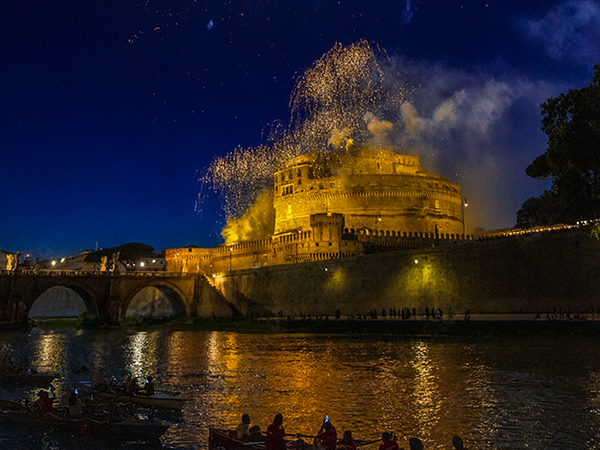
The period in which Natale di Roma falls coincides with one of the most beautiful times of year in the capital. The Roman spring is renowned for its mild climate, long bright days, and flowering gardens that color the city. Attending the celebrations means enjoying Rome at its natural peak, when historic parks like Villa Borghese fill with flowers and the Tiber reflects a golden light at sunset.

Strolling along the riverbanks after attending the historical reenactments, perhaps stopping for an aperitivo on one of the barges moored along the shores, means experiencing Rome authentically, away from tourist frenzy. April 21 often coincides with the Easter period, when many people have days off and can dedicate time to cultural discovery without the pressure of daily commitments. The festive atmosphere extends beyond the official events, drawing the whole city into a widespread celebration.

Connection with a Universal History

Attending the Birthday of Rome does not only mean celebrating a city, but reconnecting with the history of Western civilization. Rome was not only the capital of an empire, but the place where institutions, legal concepts, artistic and architectural forms were born or developed that shaped the modern world. Roman law is at the foundation of the legal systems of many countries, the Latin language gave rise to the Romance languages spoken by hundreds of millions of people, and Roman architecture has influenced the urban planning of entire nations.

Celebrating the founding of Rome therefore means reflecting on these legacies, better understanding the cultural roots that define us. For students of history, archaeology, architecture, law or classical literature, attending Natale di Roma is an exceptional educational opportunity, allowing them to see concretely realized themes studied theoretically. But even those without specialist training find in this celebration food for thought on historical continuity, on the relationship between past and present, and on the persistence of values and institutions across millennia.

A Model of Sustainable Cultural Promotion

The model of Natale di Roma also represents a virtuous example of how to promote cultural heritage in a sustainable and respectful way. Historical reenactments do not damage monuments but contextualize them, helping audiences understand them better. Free museum openings bring new audiences to culture, creating potential future visitors. Events spread over multiple days and across different neighborhoods distribute visitor flows, avoiding overcrowding of individual sites.

This approach demonstrates that it is possible to celebrate history without turning it into a sterile commercial product, maintaining authenticity and educational value. For those interested in cultural management, tourism policies or heritage promotion, observing how Natale di Roma is organized offers ideas and models applicable in other contexts as well.

The Birthday of Rome is therefore much more than a folkloric event or a formal commemoration. It is a total cultural experience that offers valid reasons for people with very different interests: history enthusiasts, spectacle lovers, families with children, scholars, curious tourists and proud residents alike. Attending means being part of a millennial tradition, experiencing history in a direct and engaging way, and discovering or rediscovering an extraordinary city at the moment of its greatest identity celebration.

Frequently Asked Questions

The Birthday of Rome, also called Natale di Roma, is the annual celebration of the city's founding held every April 21. It commemorates the traditional date of 753 BC when Romulus is said to have traced the sacred furrow on the Palatine Hill, and today it is celebrated with historical reenactments, costumed processions, cultural events and initiatives spread throughout the capital.

The symbolic date of the Birthday of Rome is April 21, but the celebrations usually span several days, roughly between April 19 and 23. During this period, reenactments are held at the Circus Maximus, processions take place along Via dei Fori Imperiali, museums hold special openings, guided tours, lectures and activities for families and schools are organized.

The heart of the celebrations is the Circus Maximus, where the Gruppo Storico Romano organizes reenactments, historical encampments and gladiator shows. Another central moment is the grand historical procession that marches along Via dei Fori Imperiali to the Colosseum; other venues include the Capitoline Hill, the Capitoline Museums, the Teatro dell'Opera and the Pantheon, where the famous beam of light on April 21 can be observed.

Many activities in the program are free or nominally priced: access to the historical procession, the reenactments at the Circus Maximus and numerous events in public squares is usually free until capacity is reached. Civic museums often offer free or reduced admission for residents, while some guided tours and special initiatives may require booking or a specific ticket as indicated in the official programs.

Yes, the Birthday of Rome is designed to engage a very wide audience: families with children, students, history enthusiasts and tourists. Younger visitors can take part in educational workshops and historical games, while adults will find guided tours, lectures and reenactments that bring the city's history to life. The festive atmosphere spread across different neighborhoods makes the experience accessible and evocative for anyone who wants to discover or rediscover Rome on its birthday.