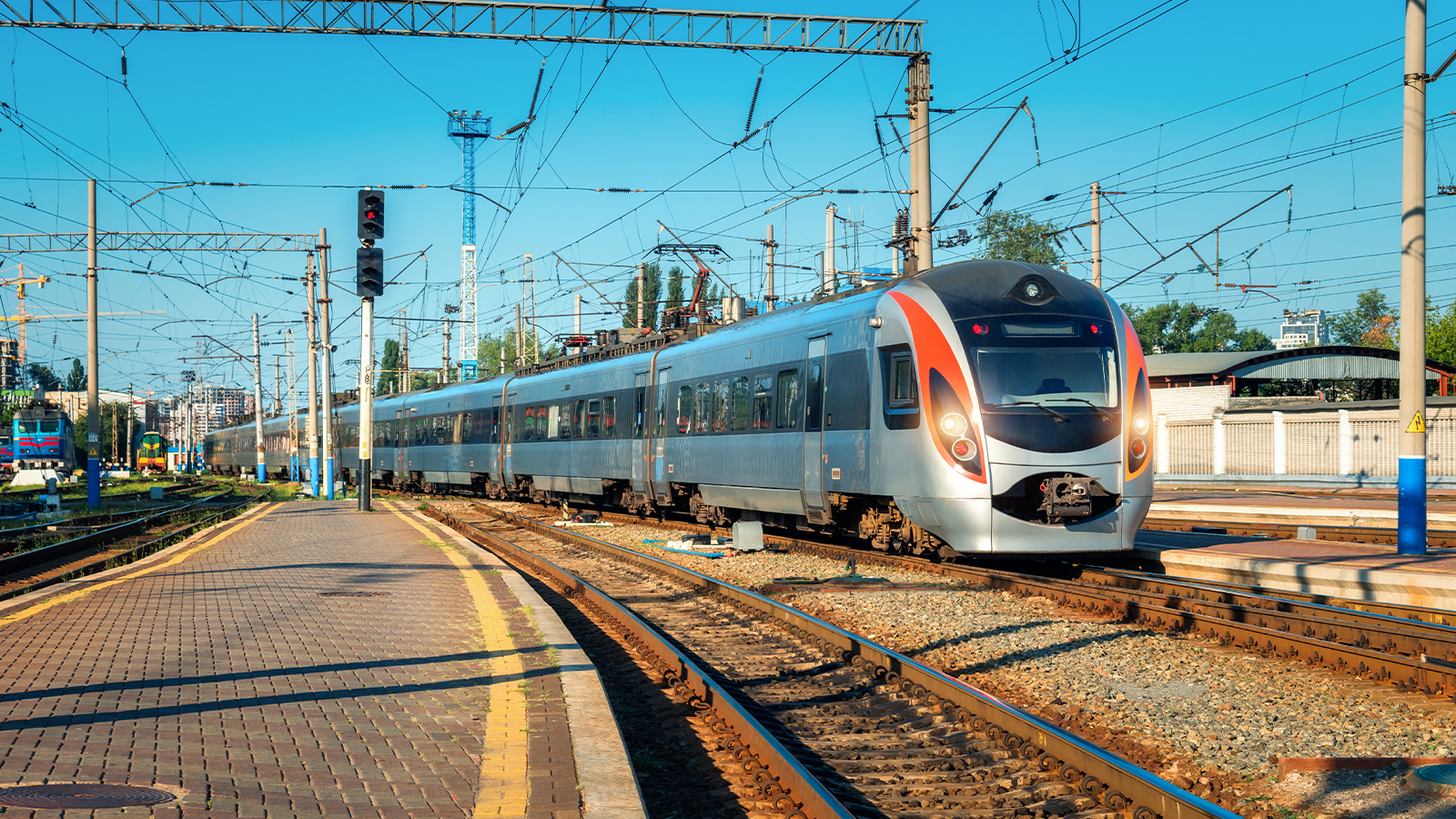

Every great city has its vital arteries, those infrastructures that set the rhythm of daily life and connect seemingly distant places. For Rome, one of these fundamental arteries is undoubtedly the Roma-Lido railway, a little train that for almost a century has accompanied Romans toward the sea, passing through suburbs, residential neighborhoods, green areas, and finally reaching the Ostia coast.
It is not just a means of transportation, but a true symbol of identity for thousands of people. Anyone who grew up in Rome knows perfectly the characteristic sound of its trains, the particular smell of the carriages on summer days, the wait at the station on cold winter mornings. It is an integral part of the collective memory of the city, a silent witness to generations who have taken turns on its seats.
The Roma-Lido train is an urban railway connecting the center of the Capital to the sea at Ostia. Along the route, the railway stops at various stations, each with its own charm, local attractions, and services waiting to be discovered, allowing passengers to board or alight at their desired destinations.
Why the Roma-Lido is so important for the city
Before diving into the history and technical details, it is worth understanding why this railway line holds such strategic importance for Rome. We are not simply talking about any metropolitan train, but an essential connection that serves hundreds of thousands of people every year.
The umbilical cord between Rome and its sea
Rome is one of the few European capitals to have the sea so close. While cities like Madrid or Milan have to make do with lakes or rivers, Rome can boast an extensive and accessible coastline just a few kilometers from the center. The Roma-Lido is the thread that holds these two worlds together, allowing Romans to live the dual identity of metropolitan citizens and inhabitants of a seaside city.
But the importance of the Roma-Lido goes beyond its beach-going function. This railway serves densely populated neighborhoods like Acilia, Vitinia, and central Ostia, areas where tens of thousands of people live and use this line every day to go to work, study, and run errands. Without the Roma-Lido, entire neighborhoods would be practically isolated.
The economic and social impact
The railway has generated and continues to generate enormous economic benefits for the territory it passes through. The neighborhoods served by the line experienced accelerated urban development precisely because of the presence of the station. Shops, bars, restaurants, and commercial activities of all kinds have flourished around the stops, creating vibrant local microeconomies.
Ostia's beach tourism would be unthinkable without this direct connection. Thousands of tourists, especially during the summer months, use the Roma-Lido to reach the beaches without having to rent cars or rely on expensive taxis. It is a fundamental competitive factor for the Roman coast compared to other seaside destinations.
From a social perspective, the railway represents an element of cohesion. People from different neighborhoods and different social backgrounds meet on the same train every day, sharing space and time. It is a small itinerant democracy where the company executive and the factory worker, the university student and the retiree mingle daily.
The history: from 19th-century origins to today
Its origins are very old, dating back to the late 19th century, although the official inauguration of the little train is dated August 10, 1924. The first project for a railway connecting Rome to the sea was proposed by engineer Felipe Costa, following growing demand from citizens, but it was abandoned shortly after due to the fall of the Papal State, which at the time governed the entire area. Between 1900 and the outbreak of the First World War, various companies were set up and many projects were drawn up. Among these, engineer Paolo Orlando proposed a standard-gauge electrically powered railway, and the project envisaged a terminus between the Colosseum and Via Cavour, although ultimately, based on various considerations, it was decided that the terminus would be at Porta San Paolo. The project was finally approved by the government in 1913, though following the First World War the construction work, started in 1918, was interrupted and then quickly resumed, until the railway was inaugurated in 1924. Subsequently, during the Second World War, during the German occupation the railway played a significant role in transporting troops and supplies, which ultimately led to the destruction of some infrastructure. However, after the war the line was rebuilt, becoming a symbol of a new beginning for the citizens of Rome.
The historical context: Rome as capital and the need for the sea
To fully understand the genesis of the Roma-Lido, one must immerse oneself in the climate of post-unification Italy. Rome had become the capital of the Kingdom in 1870, wresting that role from Florence. The population was growing rapidly, urbanization was proceeding at a frantic pace, and with it new needs were emerging.
Romans, who for centuries had lived essentially within the Aurelian Walls, began to look beyond the city's boundaries. The sea, which until then had been perceived as distant and dangerous (due to the malaria that afflicted the coastal areas), was beginning to be seen as a resource, a place of leisure and health.
The first proposals for a rail connection with Ostia were born precisely from this new sensibility. Felipe Costa was a visionary who was the first to understand the strategic importance of connecting the capital to its natural maritime outlet. His project, unfortunately, clashed with the political turbulence of the period: the end of the temporal power of the popes created an institutional void that delayed any infrastructure initiative.
The wartime period: destruction and rebirth
During the Second World War, the Roma-Lido took on a strategic military role. The Germans used the line to move troops and materials toward the coastal defenses, fearing an Allied landing on the Roman coast. This military function inevitably attracted Allied bombing, which severely damaged some stations and sections of track.
Romans who lived through those years tell of how the little train kept running, albeit irregularly and dangerously, even during the occupation. It was an anchor of normality in a time of madness, a way of moving and searching for food in the countryside when the city was suffering from hunger.
The post-war reconstruction of the line was rapid, fueled by the desire for rebirth that pervaded all of Italy. Restoring the little train to working order meant not only reinstating a transport service, but also symbolically affirming that normal life could begin again, that Romans could return to the sea as before the war.
The economic boom years
The 1950s and 1960s represented the golden age of the Roma-Lido. The economic boom brought widespread prosperity, and with it the possibility for many families to afford the luxury of trips to the sea. Ostia was transformed from a fishing village into a popular seaside resort, with the construction of dozens of beach clubs, guesthouses, and restaurants.
The little train was literally stormed on summer weekends. Period photographs show packed trains, with people clinging to the outside, children held in arms, bags and umbrellas everywhere. It was an era of joyful recklessness, where safety rules were still a long way off and the important thing was to get to the sea.
In those years the myth of the "Ostia train" was born in popular Roman culture. Songs, films, stories: the Roma-Lido entered the collective imagination as a symbol of freedom, of escape from the everyday, of summer dreams accessible even to those with less money.
The decline and crisis
From the 1980s onward, the Roma-Lido began to show signs of a decline that would become increasingly marked. Investment in maintenance decreased, the trains aged, the stations fell into a state of progressive neglect. Delays became the norm, breakdowns were frequent, and cleanliness was a distant memory.
The causes of this crisis were many: lack of public funding, inefficient management, political priorities directed elsewhere. The Roma-Lido became a symbol of the decay of Rome's transportation, the subject of daily complaints from exasperated commuters. Photos of dirty carriages, vandalized stations, and broken information boards multiplied on social media and in the press.
Commuters developed a love-hate relationship with their train. On one hand it was indispensable, on the other a source of constant frustration. User committees were formed, protests organized, petitions written. But the situation seemed never to improve, and in fact worsened year after year.
The change of management: from ATAC to Cotral
A crucial moment in the recent history of the Roma-Lido was the transfer of management from ATAC (Rome's municipal transport company) to Cotral (the Lazio regional company). This change, which took place in 2021, arose from the recognition that ATAC was unable to guarantee an adequate service on the line.
The transition was complex and not without controversy. Responsibilities, personnel, and accountability had to be redefined. For months the situation remained confused, with users not knowing who to turn to to report problems or ask for information. This also explains the Google Maps case, which we will discuss later.
Cotral promised significant investment, new trains, renovated stations, and a more punctual service. Romans, burned by decades of unkept promises, remained skeptical. Concrete facts were needed, not words.
Tickets: fare systems and value
Tickets
Since the tickets are the same as for other forms of public transport in Rome, they can be purchased at urban railway stations, metro stations, news agencies, and grocery stores. Depending on your needs you can choose between the 1.50 euro ticket valid for one train ride, the 7 euro ticket valid for 24 hours, the 12.50 euro ticket valid for 2 days, the 18 euro ticket valid for 3 days, or the 24 euro ticket valid for one week. The latter option is definitely the best if you spend a full week in Rome, as it offers unlimited access to the entire ATAC transport system.
How and where to buy travel tickets
Purchasing tickets is relatively straightforward, although it can be confusing for those unfamiliar with the Roman system. In addition to traditional sales points (newsstands, tobacco shops, authorized bars), there are automatic machines at almost all stations. These accept coins, banknotes, and credit cards, though they do not always work perfectly.
A practical tip: if you arrive in Rome and plan to use public transport frequently, buy a weekly pass right away. You will avoid the stress of having to find where to buy a ticket every time, and economically it is definitely worthwhile. Consider that just two round trips in a day already cost 6 euros, so the weekly pass pays for itself quickly.
For residents there are monthly and annual passes that are even more affordable, with differentiated rates for students, seniors, and other special categories. The Roman fare system is complex but, once understood, offers options for every budget.
Integration with other services
A fundamental aspect of the Roman ticketing system is integration. With the same ticket you can use the metro, buses, trams, and the Roma-Lido, freely switching from one service to another within the ticket's validity period. This flexibility is invaluable, especially for tourists who need to move between different areas of the city.
The weekly pass, in particular, completely transforms the experience of visiting the city. You no longer need to calculate routes, worry about costs, or meticulously plan your movements. You hop on a service, go where you like, get off, and start again. It is total freedom of movement.
Do pay attention to validation. The ticket must always be stamped at the start of the journey using the yellow machines at station entrances and on surface vehicles. Inspections are frequent, especially on the Roma-Lido in summer, and fines for traveling without a ticket are steep.
Apps and digital systems
In recent years smartphone apps have emerged that allow you to purchase digital tickets. The official ATAC app lets you buy travel tickets, display them on your phone screen, and have them validated at inspection. It is convenient, fast, and avoids the problem of broken machines or shops that have run out of tickets.
Other third-party apps, such as MyCicero, offer similar services also integrating parking and other features. The digitalization of public transport is still in progress in Rome, with all the associated issues, but the direction is the right one.
Timetables: when the Roma-Lido runs
Timetables
As for the timetable, the first train departs at 5:15 AM, while the last departs at 11:30 PM, providing up to eight trains per hour during peak times. At night the line is replaced by bus number 3, which departs from Piazza Venezia and goes to the Cristoforo Colombo stop. Normally trains run every 15 minutes during peak hours and every 30 minutes during off-peak hours, although in summer trains run more frequently due to increased use of the line, especially by tourists visiting the beach.
The weekday schedule
During working days, the Roma-Lido follows well-defined rhythms dictated by the needs of commuters. The morning rush hours, roughly between 7 and 9 AM, see an intensification of service. Trains follow each other at short intervals, attempting to absorb the massive flow of people heading to the center for work or study.
The carriages at these times are literally packed. It is difficult to find a seat, and often you travel standing, squeezed together like sardines. This is the least pleasant dimension of commuting, the kind that wears people down daily. Yet there is also a human side: acquaintances are made, quips exchanged, friendships formed between people who find themselves in the same carriage every day.
The middle hours of the day are quieter. Trains pass less frequently, about every half hour, but are also much less crowded. This is the ideal time to travel if you want to reach Ostia Antica or take a relaxed trip to the sea off-season.
In the afternoon, especially between 5 and 8 PM, the morning chaos is replicated in the opposite direction. Everyone is heading home, the train fills up again, and the tiredness of the working day is written on people's faces. The little train becomes a kind of limbo between work and private life, a moment of decompression where you read, listen to music, or scroll through your phone.
Weekends and the summer season: a change of pace
On weekends the Roma-Lido completely changes identity. No longer a commuter train but a leisure train, a means of recreation rather than necessity. The passenger mix changes radically: fewer commuters in jackets and ties, more families with children, groups of friends, tourists with backpacks and cameras.
In summer this transformation reaches its peak. On July and August weekends the Roma-Lido resembles a mass exodus train more than a normal metropolitan service. Every carriage is packed, people stand with umbrellas, cool bags, and inflatable mattresses. The air conditioning, when it works, is totally insufficient to cool that mass of people. People sweat and complain, but they endure it because the destination is worth the discomfort.
During this period the frequency increases noticeably. Trains can run as often as every 7-8 minutes at peak beach times, attempting to handle the pressure of thousands of Romans simultaneously wanting to reach the sea. Despite the increased service, the trains remain overcrowded. Some give up and turn back, while others patiently wait for the second or third train hoping to find space.
The night replacement service
When the Roma-Lido stops running, shortly after 11:30 PM, the night bus number 3 comes into operation. This bus essentially follows the same route as the railway, connecting the center with Ostia throughout the night. It is a lifeline for those returning late from an evening at the seaside or for night-shift workers.
The night bus has a particular atmosphere. Passengers are few, often tired, sometimes a little tipsy after an evening at the seafront venues. The silence of the night, broken only by the sound of the engine, creates a strange intimacy between strangers sharing the same journey in the dark.
The stops are fewer than the daytime train stops, and the intervals between buses can be long, up to 40-50 minutes. It is worth checking the timetable in advance to avoid finding yourself stranded at a deserted station in the middle of the night.
The stops: a journey through Rome
The train departs from Roma Porta San Paolo station, passing through Basilica San Paolo, Magliana, Tor di Valle, Vitinia, Acilia, Casal Bernocchi, Centro Giano, Ostia Antica, and the five stations at Ostia, to the southern limit of the Ostia Lido resort neighborhood, the Cristoforo Colombo station. The average travel time for the entire line is 37 minutes.
This line also connects with metro line B at Porta San Paolo, Basilica San Paolo, and Magliana, making it very easy to reach destinations not included in the train's route.
Porta San Paolo: the historic terminus
The departure station is right next to the Pyramid of Cestius, one of the most curious and photographed monuments in Rome. This strange pyramid-shaped funerary monument, erected in the 1st century BC, creates a disorienting contrast with the modern railway station. It is as if different eras meet in the same urban space.
Porta San Paolo is a crucial interchange hub. Here converge metro line B, numerous bus lines, Roma Ostiense railway station (for regional and intercity trains), and of course the Roma-Lido. Metro B line, numerous bus lines, Roma Ostiense railway station, and the Roma-Lido all converge here.
The station was recently renovated, with wider platforms, modern shelters, and digital information systems. It remains crowded, especially during rush hours. Its proximity to the Testaccio neighborhood, a busy area of bars and restaurants, keeps it lively in the evenings too.
Basilica San Paolo: between the sacred and the urban
The next stop takes its name from the majestic Basilica of Saint Paul Outside the Walls, one of the four papal basilicas in Rome and a pilgrimage destination from around the world. The church, rebuilt after the fire of 1823, retains a particular charm with its medieval cloister and Byzantine mosaics.
Here too there is an interchange with metro B, making this stop strategic for those who want to visit the basilica arriving from different areas of Rome. The surrounding area has undergone significant transformation in recent decades, from a semi-industrial zone to a residential neighborhood undergoing redevelopment.
Magliana: the rationalist city
The Esposizione Universale di Roma (EUR) is a unique neighborhood in Rome's urban landscape. Designed in the 1930s along the lines of rationalist architecture, it was intended to host the 1942 world's fair, which was never held due to the war. What remain are the majestic white buildings, wide and straight roads, and monumental perspectives.
The Magliana stop serves both the EUR neighborhood and the more popular and densely populated Magliana area. This interchange with metro B makes the station particularly busy. Civil servants who work in the ministries and companies based in EUR, students heading to university, and tourists wanting to visit the Museum of Roman Civilization or the Square Colosseum get off here.
Tor di Valle: the racetrack and the future stadium
Tor di Valle is famous mainly for its racetrack, where horse racing and other events are held. The area is predominantly commercial and industrial, with large warehouses and logistics centers. It is not particularly attractive from a tourist point of view, but it has considerable economic importance for the city.
This is where Roma's new stadium is supposed to be built, a project debated for years and never realized due to endless bureaucratic complications and political opposition. If the project were finally to come to fruition, this stop would acquire enormous strategic importance, becoming the arrival point for tens of thousands of fans on match days.
Vitinia: the strategic residential neighborhood on the Roma-Lido
Vitinia is the typical Roman suburban neighborhood that developed in the post-war period. Apartment buildings, small houses, a few taller buildings, public parks, and shopping centers. Nothing spectacular from an architectural point of view, but a lively community of families and workers who go about their daily lives here. Discover more about the neighborhoods between Rome and Ostia.
The Vitinia station serves a large catchment area, with many people taking the train every day to go to work in the center. A small commercial area with bars, newsstands, and grocery shops has developed around the stop. This is the typical micro-urbanism that spontaneously arises wherever people pass.
Acilia: the third largest residential area in Italy
Acilia deserves a separate discussion for its size and importance. With tens of thousands of inhabitants, it is a true urban satellite, a city within a city. The station is always very busy, a reference point for all Acilia residents who need to get around.
The neighborhood developed rapidly in the 1960s and 1970s, when thousands of Romans moved here in search of larger homes and lower rents. Today Acilia has a strong local identity, with its own traditions, its symbolic places, and its cohesive community.
Casal Bernocchi and Centro Giano: the intermediate stops
These two stations serve smaller but still significant residential and commercial areas. Casal Bernocchi is a neighborhood of houses and low buildings with an almost small-town atmosphere. Centro Giano, on the other hand, is a commercial area with a large shopping center that attracts shoppers from across the area.
These are less busy stops compared to Acilia or Vitinia, but still important for local residents. They represent that urban connective tissue that holds the city together, those areas that do not make headlines but where the normal lives of thousands of people unfold.
Ostia Antica: millennia of history one stop from Rome
The Ostia Antica stop is probably the place of greatest tourist interest after the terminus. Archaeology enthusiasts get off here, heading to the Ostia Antica archaeological park, one of the most extraordinary and underrated sites in Italy. The medieval village with its castle is also worth the visit.
The station is located in a still semi-rural area, with fields and vegetable gardens surviving around the archaeological site. Getting off here is like stepping into another dimension, far from the city's chaos but also from the beach bustle of Ostia Lido. It is tranquility, history, quiet beauty.
The Ostia stations: heart of the coast
The last five stops traverse the entire urban fabric of Ostia Lido, from the historic center to the southern edge of the neighborhood. Lido Nord serves the more commercial and residential area, with tall buildings and busy streets. Lido Centro is the beating heart, steps from the seafront promenade and the main waterfront.
Stella Polare is an intermediate stop in a predominantly residential area. Castel Fusano serves the neighborhood of the same name and gives access to the pine forest, one of the most beautiful green areas on the coast. Finally, Cristoforo Colombo, the terminus, is at the southern end of Ostia, a starting point for exploring the less crowded beaches.
Each station has its own character, its own type of users, its own atmosphere. Knowing them means understanding the human geography of Ostia, its social layers, its different souls.
Roma-Lido and the Google Maps case
Roma-Lido and the Google Maps case
The Maps service no longer shows the railway timetables but suggests taking the bus instead. Both the Roma-Lido and the Roma-Viterbo lines had already disappeared from the search engine for some time, and Cotral (the Lazio regional public transport company) had explained that the only reason the Roma-Lido timetables were not on Google Maps was because Google Transit had yet to authorize their publication following notification of the change of management of the line, which had recently passed from ATAC to Cotral itself. During your visit, we therefore strongly recommend using apps such as Moovit or Citymapper as alternatives to stay updated on the correct train frequencies and timetables.
The practical consequences for users
This technical-bureaucratic problem has caused no small amount of inconvenience to users and tourists. Google Maps is the most widely used navigation app in the world, and most people blindly follow its suggestions. When the algorithm proposes alternative bus routes, completely ignoring the existence of the Roma-Lido, users follow those directions and end up making extremely long and uncomfortable journeys.
Foreign tourists found themselves taking three or four buses to reach Ostia, spending hours, when all it took was a direct train with just 37 minutes of travel. The frustration is understandable, especially considering they only discovered the existence of the train once they had arrived at their destination, talking to locals.
The situation also generated informational confusion. On travel forums and social media, questions multiplied along the lines of "does the train to Ostia still exist?" or "why doesn't Google Maps show me the Roma-Lido?". The answers were often contradictory, increasing the informational chaos.
MiTuCasa's battle to bring the Roma-Lido back to Google Maps
Faced with this paradoxical situation, not everyone stood by passively. A virtuous example of concrete commitment comes from MiTuCasa, a short-term rental service managing accommodations in Vitinia, one of the key stops on the Roma-Lido. The owner, a host and software engineer, immediately understood the devastating impact that the railway's absence from Google Maps was having both on his guests and on the entire area.
He did not limit himself to complaining on social media or waiting for someone else to solve the problem. He launched a real campaign of reports and direct communications to Google, using his technical skills to understand the workings of the Google Transit system and the requirements necessary for the publication of data. Weeks of emails, support tickets, technical documentation submitted, persistent follow-ups.
The perseverance paid off. Thanks in part to this personal commitment, the Roma-Lido finally became visible again on Google Maps, solving a problem that was causing harm to thousands of people every day. It was not just a matter of commercial interest for his accommodations in Vitinia, but a genuine sense of civic duty: understanding that a well-connected and easily reachable territory benefits the whole community, not just individual operators.
MiTuCasa's concierge service: accurate information for travelers
It is precisely from the awareness of how fundamental it is to provide accurate and up-to-date information to travelers that the concierge service offered by MiTuCasa was born. It is not enough to provide clean and comfortable accommodation; guests must be guided in discovering the area, helped to find their bearings, and their practical questions answered.
The concierge service answers all travelers' questions: how to reach the accommodation from the airport, which public transport to use, where to shop for groceries, which restaurants to try, what to visit nearby. But above all it provides correct and verified information about transportation, preventing guests from falling into information traps like the Google Maps one when the Roma-Lido was invisible.
MiTuCasa guests receive detailed guides, personalized maps, useful contacts, and tips based on direct experience. Not generic information copied from the internet, but practical advice tested in the field. If a guest needs to reach the Colosseum from Vitinia, they are not simply told "take the Roma-Lido," but are explained exactly where to buy the ticket, which platform to wait on, which stop to get off at, and how to make the connection with the metro.
The next battle: OpenStreetMap and Booking.com
The victory achieved with Google Maps has not stopped MiTuCasa's commitment to improving the visibility of the Roma-Lido on digital platforms. Attention has now shifted to another crucial front: the maps on Booking.com, which use OpenStreetMap data.
Here too the problem is similar: the Roma-Lido stations are not correctly recognized by the system, or are displayed incompletely. When a potential guest searches for accommodation on Booking.com filtering by "near the station," accommodations in Vitinia, Acilia, or the other Roma-Lido stops often do not appear in the results, despite being perfectly connected to the center of Rome.
This represents a huge competitive disadvantage for hosts operating in these areas. Their accommodations, although well located and easily reachable, are invisible to a significant portion of potential customers. It is a market distortion based on incomplete or incorrect geographic information.
MiTuCasa is therefore actively pressing both OpenStreetMap (to update and complete the data for all stops on the line) and Booking.com (to correctly integrate this data into its own search and filter system). It is patient and meticulous work, requiring specific technical skills as well as the ability to engage with complex corporate bureaucracies.
The goal is for every single Roma-Lido stop to be recognized as a relevant transport point, with all associated information: timetables, connections, distances. Only then will travelers be able to make informed choices and hosts operate on a level competitive playing field.
An example for other operators
MiTuCasa's commitment should serve as an example for other operators in the tourism sector. Too often people limit themselves to managing their business passively, accepting system inefficiencies as inevitable. But when someone decides to take concrete action, to invest time and energy in solving problems that harm the entire community, results follow.
It is not just altruism. It is entrepreneurial intelligence to understand that a well-functioning, well-mapped, easily accessible territory benefits all operators. The pie gets bigger for everyone; it is not a matter of sharing ever-smaller crumbs.
Other hosts and tourism operators in the area could follow this example, joining forces to push for improvements in digital information infrastructure. A positive lobby, not seeking privileges but simply asking that reality be correctly represented on the platforms that millions of people use daily.
The current situation and future prospects
At the time of writing, the Roma-Lido has finally returned to visibility on Google Maps, thanks in part to the efforts of those like MiTuCasa who did not give up in the face of digital bureaucracy. This represents an enormous step forward for the accessibility of the Roman coast and for all tourism operators in the area.
The battle for recognition on Booking.com maps is still ongoing, but there are positive signs. OpenStreetMap is gradually updating its data, and it is hoped that Booking.com will soon integrate this information into its own system. When this happens, thousands of accommodations will suddenly become more visible and attractive to travelers.
In the meantime, the best strategy is to spread the word. If you manage an accommodation near the Roma-Lido, make sure to clearly state in the description the proximity to the station and the travel times to reach the center. If you are a traveler, do not rely exclusively on automatic filters but read the descriptions and personally verify the position of accommodations relative to railway stops.
Future prospects for the Roma-Lido train
Transport authorities have considered various expansion projects to further improve the Roma-Lido railway. One of these projects envisages extending the line to connect with other coastal areas, offering even more seaside destinations accessible by train. These extensions would open up new opportunities for tourism and stimulate economic development in previously underserved areas. Integration with the high-speed rail network is also one of the ideas for the potential future development of the Roma-Lido which, not only would benefit tourists, but would also facilitate faster and more efficient transport for commuters.
Furthermore, the Roma-Lido railway is actively involved in sustainable development initiatives, taking concrete steps to reduce carbon emissions and find new renewable energy sources to power the trains, aiming to make the railway more environmentally friendly while contributing to the local economy and the tourism sector.
The new trains: finally a reality
One of the most eagerly awaited developments now being realized is the arrival of new modern rolling stock. The old trains, some with over forty years of service, will be progressively replaced by state-of-the-art equipment: efficient air conditioning, ergonomic seats, digital information systems, and greater capacity.
The first new trains began running between 2024 and 2025, welcomed with enthusiasm by commuters tired of traveling on dilapidated rolling stock. The difference is impressive: quietness, comfort, cleanliness, reliability.It is like going from a 1980's economy car to a modern vehicle, with all the advantages that come with it.
The investment was significant, tens of millions of euros, but absolutely necessary. A modern railway needs modern trains, and the Roma-Lido had fallen too far behind European standards. This renewal marks a decisive turning point for the line's future.
Station renovation
Alongside the renewal of the trains, station renovation work is progressing. Some have already been completely redone: new shelters, LED lighting, new paving, removal of architectural barriers, digital information systems, and enhanced video surveillance.
Other stations are still in the planning phase or awaiting funding. The plan calls for work on all stops on the line within the coming years, completely transforming the travel experience. No more dark and run-down stations, but modern, safe, welcoming spaces.
Some projects also envisage the integration of commercial services at the larger stations: bars, newsstands, small shops. The idea is to transform stations from simple transit points into urban living spaces, where people can stop, meet, and make use of services.
The extension southward: Torvaianica and beyond
One of the most ambitious projects concerns the extension of the line beyond Cristoforo Colombo, reaching coastal towns further south such as Torvaianica, Anzio, and perhaps Nettuno. This would require massive investment and a long timeline, but would completely transform the accessibility of the Roman coast.
Imagine being able to take a direct train from central Rome all the way to Anzio, without transfers, without stress. Beach tourism would receive an enormous boost, and areas today reachable only by car would become easily accessible by public transport. Commuters from these towns would also have a fast and comfortable connection with the capital.
The project is still on paper, with feasibility studies underway and inevitable political controversies. But the idea is concrete, technically achievable, and could materialize within the next decade if there is the political will and the necessary funding.
Connection with high-speed rail
The idea of integrating the Roma-Lido with the high-speed rail network is fascinating but complex. The concept would be to allow passengers arriving from other Italian cities to reach the coast directly without having to cross Rome, changing services multiple times.
Technically this would mean creating a connection between the high-speed stations (Termini, Tiburtina) and the Roma-Lido, perhaps via a bypass that avoids the center. The advantages for tourism would be enormous: a traveler from Milan could take a high-speed train, arrive in Rome, and continue directly to Ostia in a single journey.
This project too is still in an embryonic phase, with many technical and economic unknowns. But the very fact that it is being seriously discussed indicates how the Roma-Lido is now considered a strategic asset to be enhanced and developed, no longer a marginal and neglected infrastructure.
Environmental sustainability
The environmental issue is central to the line's future prospects. The new trains are designed to consume less energy, with regenerative braking systems that reduce waste. Station lighting is moving entirely to LED, drastically reducing electricity consumption.
The installation of solar panels on the roofs of stations and depots is being evaluated, to produce clean energy for use in the daily management of the railway. Some stations could become energy self-sufficient, a model example of sustainable mobility.
The maintenance of vegetation along the line has also been rethought along ecological lines, prioritizing low-maintenance native plant species, creating ecological corridors for wildlife, and reducing the use of pesticides and chemical weedkillers.
Cultural and identity significance
Beyond the practical and infrastructural aspects, the Roma-Lido holds a deep cultural and identity value for Romans. It is part of the collective memory, an element that unites different generations through shared experiences.
The memories of Romans
Ask any Roman of a certain age, and they will certainly have memories tied to the little Ostia train. The first journey as a child held by the hand of their parents, the excitement of seeing the sea getting closer, school trips, first adolescent loves played out on those uncomfortable seats, summer evenings returning from the sea with sun-burned skin.
These are private memories that become collective, personal experiences that intertwine with those of thousands of other people, creating a common narrative fabric. The little train is one of the threads that holds Roman identity together, an element of continuity in a city that changes too quickly.
In films set in Rome, in Roman songs, in the stories of local writers, the Roma-Lido appears often as a scenic element but also as a symbol. It represents movement, the search for escape, the boundary between the city and the rest of the world.
Representation in art and popular culture
Cinema, literature, music: the Roma-Lido has inspired artists of different generations. Pier Paolo Pasolini mentioned it in his writings, describing the working-class Rome that every Sunday migrated toward the sea. Roman singers have made it a metaphor for escape and freedom, that ancestral need to flee from concrete toward the open horizon.
Documentary photographers have produced splendid reportages on the train's passengers, capturing faces, stories, and emotions. These photographs constitute a valuable anthropological documentation of Roman society across the decades, showing how clothing, customs, and social composition changed over time.
Contemporary art has also taken an interest in the Roma-Lido. Installations, performances, and street art projects have used the stations and trains as creative spaces, seeking to restore aesthetic dignity to places too often neglected and run-down.
Practical tips for daily use
Practical tips for tourists using the Roma-Lido
If you are a tourist and want to use the Roma-Lido, the main advice is: do not be in a hurry. Delays are possible, even though punctuality is improving with the new trains. Always factor in extra time when planning your day. For a complete experience, read our guide on what not to miss in Ostia.
Download one of the recommended apps (Moovit or Citymapper) to have up-to-date real-time information. Do not blindly trust Google Maps for Roman public transport, as you risk spending hours on absurd routes.
If you want to visit Ostia Antica, get off at the stop of the same name. If you want to go to the beach, continue to one of the Ostia Lido stations (Lido Centro is the closest to the main seafront). In summer avoid weekends if you can, as overcrowding is extreme. To discover all the attractions in Rome and surroundings, consult our complete guide.
For commuters
If you are a commuter, your survival depends on your ability to adapt. Learn the timetables by heart, recognize the most reliable trains, identify the least crowded carriages. Over time you will develop personal strategies to make the journey less stressful.
Always bring something to read or listen to. The 37 minutes of travel can become a moment of relaxation if you have a good book or a playlist you enjoy. Transform dead time into productive or leisure time.
Be patient with delays and breakdowns. Getting angry serves no purpose, it only increases your stress levels. Learn to accept the imperfections of the system; it is part of Roman life. And when everything works well, appreciate that small daily miracle.