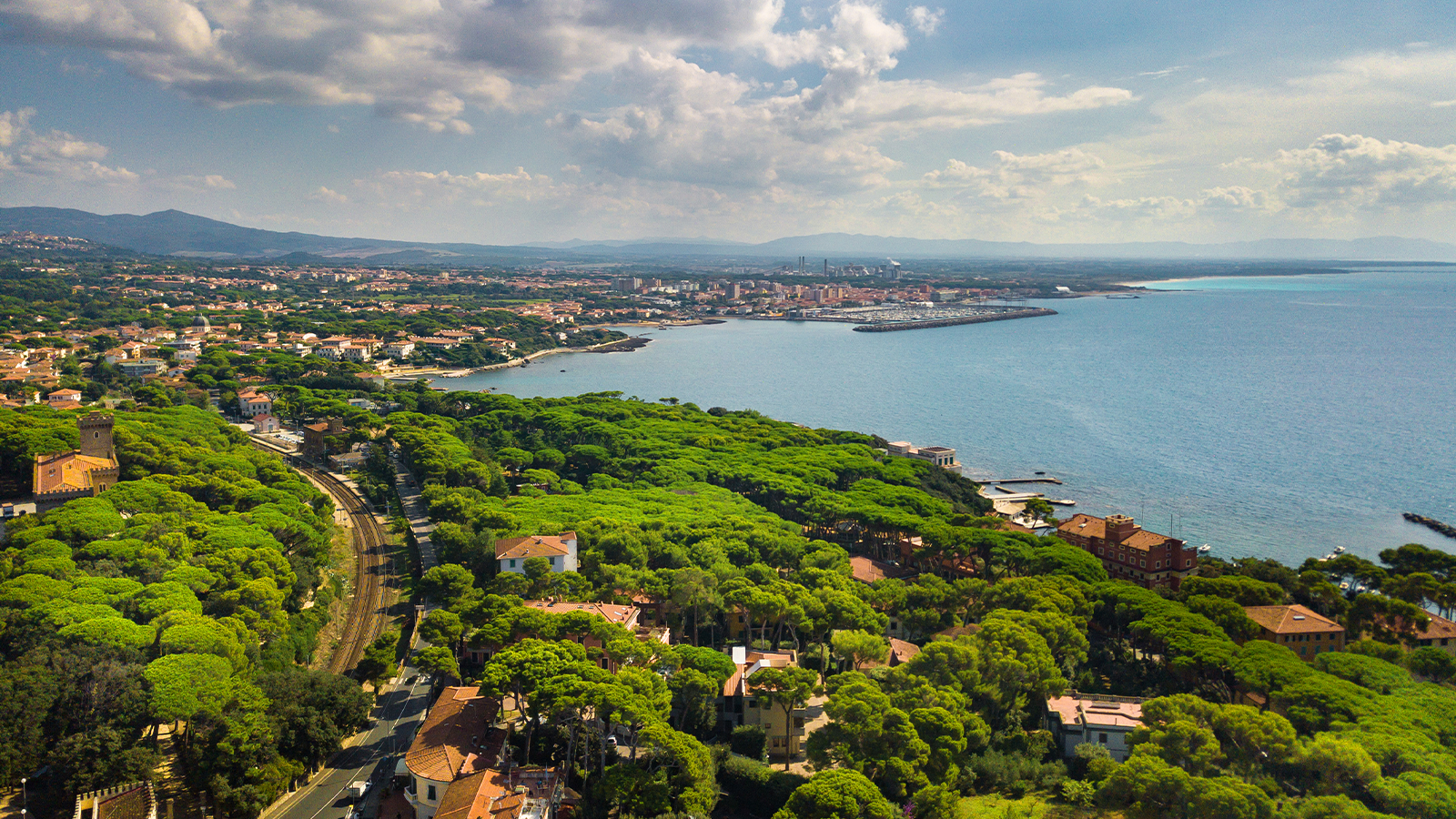

When you think of Rome, you probably picture the Colosseum, the Vatican, Piazza di Spagna. But the capital conceals a vast territory stretching all the way to the sea, passing through neighborhoods, villages and natural areas well worth discovering. The stretch between the historic center of Rome and the Ostia coastline represents a fascinating microcosm where ancient history, wild nature, transforming suburbs and an often underestimated cultural vitality all coexist.
The hidden charm of Rome's outskirts
Rome's suburbs have a bad reputation, often undeserved. You will not find baroque grandeur here, but you will discover something equally precious: authenticity. These neighborhoods tell the story of everyday Rome - the one of local markets, family-run trattorias, parks where children play soccer.
The territorial strip connecting Rome to Ostia is particularly interesting because it represents a transition zone. Starting from the historic center, you pass through increasingly modern neighborhoods, centuries-old pine forests, agricultural areas that survived property development, until you reach the sea. It is a geographical but also a temporal journey, a way to understand how the city developed throughout the twentieth century.
Many Romans themselves know little about these areas - they pass through quickly to reach the sea in summer and never come back. But those who stop to explore discover vibrant communities, strong local traditions, forgotten stories that deserve to be heard.
Vitinia: the neighborhood between countryside and railway
There are several neighborhoods, often forgotten by tourists, located between Rome and Ostia, such as Vitinia, Acilia, Infernetto, Ostia Antica and many others. In this article we will introduce you to these wonderful areas that are often underrated and that can certainly enrich your visit to Rome!
History and identity of Vitinia
Vitinia is a Rome neighborhood surrounded by natural beauty, offering visitors a unique experience. It also has a Rome-Lido train station, making it easily accessible even from central Rome. Vitinia also has a rich and unique history, which you can explore further by reading the article "From Abandonment to the Rebirth of the Trilussa Trail". If you want to learn more about this area, also read "Vitinia and its Fascinating History".
The very name Vitinia evokes antiquity. Some scholars link it to the via Vitinia, an ancient Roman road that crossed the area. Others derive it from landholdings belonging to patrician families in the imperial era. The truth is probably lost in the mists of time, but the charm of the mystery remains.
What is certain is that Vitinia experienced significant development in the post-war period, when Rome's urban expansion reached this area too. Before that it was countryside - scattered farmhouses, cultivated fields, the occasional roadside tavern. Then came the public housing blocks, the apartment buildings, the infrastructure.
What to see and do in Vitinia
Today Vitinia maintains a character suspended between urban and rural. There are densely populated areas and others where vegetable gardens, small farms and uncultivated land that nature is reclaiming still survive. This mix creates a particular atmosphere, very different from that of the historic center but equally Roman in its essence.
The Vitinia park offers ample green spaces where families and sports enthusiasts gather. It is not a formal Italian garden, but a natural area where you can walk, run or cycle while breathing relatively clean air. Children have room to play, dogs to run, and the elderly to take their morning walks.
The main commercial area, with shops, bars and restaurants, develops around the railway station. Here you find pizza al taglio shops with excellent value for money, local markets where people still do their daily shopping, and bars where the older residents play cards in the afternoon.
The railway station: a vital hub
The Rome-Lido stop is the beating heart of Vitinia. Every morning hundreds of people take the train to go to work in the center or toward the sea. It is a privileged observation point for everyday life in Rome's suburbs: students with backpacks, workers in overalls, office workers with briefcases, mothers with strollers.
From Vitinia, central Rome is about twenty minutes by train, and Ostia another ten. This intermediate position makes the neighborhood strategic for those who want to explore both directions without spending too much on accommodation. Rents here are much lower than in the center, and some bed and breakfasts are emerging specifically to attract tourists looking for affordable alternatives.
Acilia: the third largest district in Italy
Acilia is a Rome neighborhood located roughly halfway between Rome and Ostia, and it is the third largest Italian district after Ostia and Mestre.
This area, whose name recalls the Roman Acilii family that owned property here during the Roman era, only began to develop in the 1920s with the opening of Via del Mare and the Rome-Lido railway.
Acilia is one of the several stops on the Rome-Lido railway, a train that departs from Porta San Paolo and reaches Acilia in about 20 minutes. If you want to know more about the Rome-Lido train or discover the other stops to visit new neighborhoods in Rome, read our article: Rome-Lido Train: the railway connecting Rome and Ostia.
A young neighborhood with ancient roots
Despite the name evoking the Roman era, Acilia as a residential neighborhood is relatively young. The real construction boom came in the 1960s and 1970s, when thousands of Romans moved here in search of larger homes and more affordable rents than in the center.
The urban planning of Acilia reflects the trends of those years: large apartment buildings, wide streets, commercial zones separated from residential ones. It is not a model of architectural beauty, but it works. People here live, work, raise families, grow old. It is real life, not a backdrop for tourists.
Over time Acilia developed a strong neighborhood identity. Its residents consider themselves Acilians before Romans - they have their local traditions, their sports teams, their symbolic landmarks. This sense of community belonging is something that has long since been lost in the historic center.
The shopping center and everyday life
The Porte di Roma shopping center, although technically not located in Acilia itself, is easily accessible and is one of the most important commercial hubs in the area. But the true commercial soul of Acilia lies in the neighborhood streets, in the family-run shops, in the local markets.
The Acilia market is an experience not to be missed if you want to understand authentic Rome. Fruit and vegetable stalls where vendors shout out prices, fishmongers cleaning fresh fish in front of customers, cheese and cold cuts counters where you can sample before buying. Prices are fair, quality is good, the atmosphere is vibrant.
The pizzerias and trattorias of Acilia deserve special mention. Here you eat genuine Roman cuisine without the inflated prices of the center. Coda alla vaccinara, carciofi alla giudia, pasta cacio e pepe, tripe: all the classics prepared properly, served with a smile and a bill that does not empty your wallet.
Sports and community life
Acilia has numerous sports facilities: soccer fields, gyms, swimming pools, martial arts centers. Sport here is social cohesion, especially for young people. Local sports clubs play an important educational role, keeping kids off the street and teaching values like respect, commitment and teamwork.
Public parks, even if not always in perfect condition, offer spaces for leisure time. On weekends families gather here for picnics, impromptu games and walks. They are intergenerational meeting places where children, teenagers, adults and the elderly all coexist.
Ostia Antica: where history meets the present
If you want to visit the majestic remains of ancient Rome, a visit to Ostia Antica, just half an hour by train from central Rome, is a must. Ostia Antica was the most important port of the Roman Empire, and the wonderfully preserved combination of ancient streets, ruined theaters, villas, shops and much more offers a unique vision of what it was like to live in an ancient Roman city over two thousand years ago. If you want to learn more about this magical place - its centuries-old history or the enormous archaeological park it contains - also take a look at this article: Ostia Antica: a Forgotten Archaeological Treasure.
The modern village beside the ruins
Ostia Antica is not just archaeology. Next to the ancient site there is a small inhabited village that preserves a timeless atmosphere. Low houses, cobbled lanes, cats sleeping in the sun on windowsills, geraniums on balconies: it feels like being in a provincial town rather than steps away from Rome.
The village grew up around the medieval castle and the church of Sant'Aurea. A few dozen homes, a shop or two, a couple of restaurants: nothing more. But precisely this compact scale creates a particular charm. Here time flows differently, rhythms are slow, and modernity feels light years away.
Some artists and intellectuals have chosen to live here, drawn by the tranquility and beauty of the place. Tastefully restored houses, small studios, painting workshops: the village is becoming a mini creative community, an experiment in an alternative life away from urban frenzy.
Cultural events and nightlife
In summer, the Roman theater inside the archaeological park hosts shows, concerts and classical performances. Watching a Latin play performed in the same place where it was staged two thousand years ago is an experience that touches the soul. The natural backdrop of the ruins, the torchlight, the starry sky above you all create a magical atmosphere.
The village also organizes small events: craft markets, photography exhibitions, acoustic concerts in the castle square. Nothing spectacular, but all the more authentic for it. These are opportunities to meet the locals, exchange a few words, feel part of the community even if just for an evening.
Infernetto: between agricultural past and urban development
Infernetto is a peripheral area of Rome with an ancient history dating back to the Roman Empire. It was initially a large cultivated area that was abandoned for centuries after the decline of the Roman Empire.
In more recent centuries, Infernetto was inhabited by people who produced charcoal by burning wood from the nearby forest, creating a large column of black smoke in the sky - it is from this practice that the neighborhood takes its name Infernetto (literally "little hell").
Today, Infernetto is one of the fastest-developing areas of Rome: agricultural land is rapidly giving way to industry, and many new houses, resorts and buildings are being constructed.
Urban transformation
Walking through Infernetto means observing Rome in transformation. On one side, farmhouses, dirt lanes and fenced vegetable gardens where some elderly resident still grows tomatoes and lettuce still survive. On the other, modern residential complexes, townhouses and shopping centers are rising up.
This coexistence is not always harmonious. Long-time residents look with suspicion at the arrival of newcomers, fearing the neighborhood will lose its rural identity. The new arrivals, in turn, seek services, infrastructure and connections that are often slow to arrive. It is a precarious balance, typical of expanding suburbs.
Construction here is more refined compared to other suburban areas. Many homes are detached houses with gardens, a rarity in Rome. This attracts families with children who are looking for green spaces and greater tranquility compared to denser central neighborhoods.
The Castelfusano Pine Forest: the green lung
This area is almost entirely surrounded by the Castelfusano Pine Forest and the presidential estate. The Castelfusano Pine Forest is an enormous pine forest between Infernetto and the sea, absolutely worth visiting on foot or by bicycle. Here you can find plenty of wildlife, the spectacular underground aqueducts from 700 BC and the Villa of Pliny, an archaeological site from the Roman imperial period.
The pine forest extends over more than a thousand hectares - a vast green expanse just steps from the sea. The maritime pines create a natural canopy that filters sunlight, lending a striking atmosphere especially in the evening hours. The scent of resin mingles with the salty smell of the nearby sea, creating an unmistakable fragrance.
The trails through the pine forest are perfect for walks, jogging and mountain biking. Many Romans come here on weekends to escape the concrete and breathe clean air. Families with children, athletes, couples, elderly residents with their dogs: the pine forest welcomes everyone equally.
Flora and fauna of the pine forest
The biodiversity of the pine forest is surprising. Beyond the dominant pines, you find holm oaks, oaks, myrtle and lentisk bushes. In spring the undergrowth fills with wildflowers: cyclamen, anemones, wild orchids. The colors and scents make every walk a complete sensory experience.
The fauna includes foxes, hedgehogs, weasels and badgers. Birds are numerous: woodpeckers, jays, blackbirds, robins, and birds of prey such as buzzards and kestrels. Birdwatching enthusiasts can spend hours observing the various species, especially during the spring and autumn migrations.
Unfortunately the pine forest is also fragile. Summer fires represent a constant threat, worsened by neglect and littering. Some sections have been devastated by flames in recent years, and it will take decades for the vegetation to fully recover.
Hidden archaeological remains
The Roman aqueducts running through the pine forest are fascinating testimonies to ancient engineering. Some sections are still visible, others completely absorbed by the vegetation. Walking these trails literally means walking on top of history.
The Villa of Pliny the Younger, identified by archaeologists in this very area, was a grand residence overlooking the sea. Today only a few remains survive, but the imagination can reconstruct the frescoed halls, the gardens, the private baths. Pliny describes this villa in his letters, recounting how he loved to retreat there to write and meditate away from the bustle of Rome.
Other scattered finds testify to millennia of human presence: Etruscan tombs, remains of country villas, pottery fragments continue to surface. The pine forest is an archaeological palimpsest still waiting to be fully explored.
Viale di Castelporziano: the main artery
Infernetto is connected by Viale di Castelporziano, the main road - a very long street linking the sea, the Castelfusano Pine Forest and the castle within the presidential grounds.
This road has a particular charm, especially in the section that crosses the presidential estate. The gates are always closed, but you can glimpse the lush vegetation inside, the signs warning of restricted access and the Carabinieri guarding the entrances.
The Castelporziano estate is the summer residence of the President of the Republic, but above all a protected natural reserve of enormous size. It is open to the public only on rare occasions, and guided tours are a privilege for a lucky few. Inside, intact natural environments survive with rare animal and plant species.
Traveling Viale di Castelporziano by bicycle or car is like crossing several different worlds: from the concrete of Infernetto to the wild nature of the pine forest, from the presidential estate to the beaches of the coast. It is a microcosm that contains all the contradictions and beauty of this territory.
The Ostia coastline: much more than a seafront
When Romans say "I'm going to the sea" they usually mean Ostia. The coastline stretches for kilometers and includes several areas with very different characteristics. It is not Sardinia, it is not the Amalfi Coast, but for those who live in Rome it represents an essential escape valve during the summer months.
Central Ostia: beach resorts and nightlife
The heart of Ostia is the central seafront, with its historic beach resorts. Some have existed since the 1920s and have seen generations of Romans pass by their sunbeds, dive into their pools and dance in their ballrooms.
The resorts offer full services: parasols, sun loungers, showers, bars and restaurants. Prices vary enormously: from the luxurious beach clubs frequented by celebrities and influencers to the more affordable resorts where Roman families have been returning for generations. There is room for every budget and every taste.
The seafront comes alive especially in the evenings. Bars, restaurants, ice cream shops and nightclubs: Ostia's summer nightlife is lively and loud. Do not expect sophistication - the atmosphere here is informal and popular in the best sense of the word. Loud music, laughter, groups of young people having fun, families strolling while eating ice cream.
Ostia's free beach: democratic sunbathing
Alongside the paid resorts, Ostia offers wide stretches of free beach where you can lay down at no charge. Here you find authentic Rome - the one that cannot or does not want to pay for a parasol: large families with mountains of equipment, groups of friends with guitars and Bluetooth speakers, elderly people sheltering under improvised umbrellas, young people playing beach racket.
The free beach is organized chaos, or disorganized depending on your perspective. It lacks the geometric order of the paid resorts, but there is a different energy - more spontaneous. People talk to each other, share space, make room in the shade. It is a small temporary community that forms every day and dissolves at sunset.
The water is not crystal clear like in Sardinia, to be honest. The Tiber flows into the sea nearby, the port of Fiumicino is not far, maritime traffic is heavy. But on tramontane days, when the wind cleans the sea, the water becomes surprisingly clear and swimming is pleasant.
The black sand beach: a unique geological phenomenon
One of the most surprising and least known features of the Ostia coastline is the presence, in certain stretches, of dark, almost black sand. This geological phenomenon gives the beach an unusual and fascinating appearance, very different from the classic golden beaches we are used to.
Origin of the black sand
The dark color of the sand comes from the particular mineral composition of these coastal deposits. The black sand contains high percentages of ferromagnetic minerals, mainly magnetite and ilmenite, which give it that characteristic tone. These minerals come from the erosion of volcanic rocks in the Lazio hinterland.
The Tiber, on its long journey to the sea, passes through areas of volcanic origin such as the Sabatini Mountains and the Castelli Romani. Over millennia it has transported sediments rich in these ferrous minerals, depositing them at the estuary. Marine currents then distributed these deposits along the coast, creating these stretches of dark beach.
The phenomenon is most evident after storms, when the sea stirs up deep sediments and deposits them on the shore. At certain times of year, the concentration of dark sand is higher, creating striking chromatic contrasts with the surrounding lighter sand.
Characteristics and benefits of black sand
Black sand heats up much faster than light sand, absorbing more sunlight. On fully sunny days, walking barefoot on this sand can be almost impossible during midday hours. Many beachgoers appreciate precisely this characteristic, using the hot sand for impromptu natural "sand therapy" sessions.
Traditionally, ferrous sands have been considered beneficial for health. Psammotherapy - that is, sand therapy - makes use of exactly these mineral properties. The heat and ferrous minerals are believed to have positive effects on rheumatism, arthritis and circulatory problems.
Some regular visitors to Ostia come specifically to these beach stretches to bury their legs and arms in the hot sand, convinced of the therapeutic benefits. There are no definitive scientific studies confirming these properties, but the tradition persists and many swear by their effectiveness.
Where to find it
Black sand is not evenly distributed along the entire Ostia coastline. It concentrates mainly in certain specific stretches, often the less frequented and wilder ones, away from the center. The Tiber estuary and the immediately surrounding areas contain the highest concentration of these dark deposits.
After particularly intense storms or significant swells, new deposits of dark sand can appear even in stretches normally characterized by light sand. It is a dynamic, constantly evolving process that makes every visit potentially different.
Some stretches of free beach to the south, toward Torvaianica, display this characteristic most clearly. Here the beach takes on an almost uniformly dark gray color, creating an unusual landscape that is very interesting photographically.
Visual and photographic impact
Black sand creates spectacular chromatic contrasts, especially at sunset when low-angle light enhances the color differences. Photographers and photography enthusiasts come here specifically to capture these particular nuances, so different from classic beach imagery.
The contrast between the dark sand, the white of the wave foam and the blue of the sky creates very effective visual compositions. Some artists have used this landscape as a location for photographic shoots, music videos and short films, precisely for its uniqueness on the Italian coastal scene.
The vegetation growing on the backing dunes stands out even more against this dark background. Pioneer plants such as sea lily and marram grass take on an almost surreal appearance - their brilliantly green leaves against the black sand.
Beaches to the north: from the Tiber estuary to Fregene
Moving north from central Ostia, the landscape gradually changes. The buildings thin out, paid resorts give way to wilder stretches of coast. Here the sea is often cleaner, benefiting from currents that carry away the murky waters of the Tiber estuary.
The river mouth is a particular environment, almost lunar. The sand mixes with river debris, creating muddy deposits. Waterfowl nest here, finding a food-rich habitat. It is not a place for swimming, but it fascinates with its primordial appearance and the sense of meeting between fresh and salt water.
Continuing toward Fregene, the natural dunes become more pronounced and the Mediterranean vegetation more lush. Some areas are protected nature reserves, with wooden boardwalks allowing you to cross the dunes without damaging them. In spring the sea lilies bloom, dotting the dunes with white.
Beaches to the south: toward Torvaianica and beyond
To the south, in the direction of Torvaianica, Anzio and Nettuno, the coastline maintains similar characteristics but with less crowding. This is where Romans who seek greater peace come - willing to travel a few extra kilometers to avoid the crowds of central Ostia.
The beaches are wider, the sand cleaner, the water slightly clearer. The resorts are less chaotic and the atmosphere more relaxed. Some Roman families have had their "spot" here for decades, returning every summer to the same resort, occupying the same parasols and reuniting with the same neighbors on the sunbeds.
Torvaianica has a particular charm, suspended between residential and resort life. In winter it is almost deserted; in summer it fills up suddenly. The houses - many of them second homes - only come alive in the warm months, then go back to sleep until the following season.
The connection with central Rome: infrastructure and transportation
The Rome-Lido train: the vital artery
The Rome-Lido railway is the main connection between central Rome and the sea. It departs from Porta San Paolo station, right next to the Pyramid of Cestius and the Metro B Piramide stop, and reaches Ostia in about forty minutes, stopping at all intermediate stations.
The train is always crowded, especially during peak hours and on summer weekends. Commuters, students, tourists, families headed to the sea: everyone piles onto these carriages that have seen better days. The service is often criticized for delays, breakdowns and overcrowding, but it remains the fastest and most economical way to reach the coast.
Every stop tells the story of a neighborhood, a community, a piece of Rome. From the modernity of Magliana to the townhouses of Acilia, from the pine forests of Castel Fusano to the apartment blocks of central Ostia, the journey is a geographical and social crossing of the capital.
Via del Mare and Via Ostiense
The two main road arteries connecting Rome to the sea are Via del Mare and Via Ostiense. The first is a fast-moving road, extremely busy during peak hours and on summer weekends. Kilometer-long traffic jams are the norm when everyone decides to go to the sea at the same time.
Via Ostiense is older, passes through neighborhoods and industrial areas, is slower but also more interesting from a scenic point of view. Along the route you pass the Basilica of San Paolo fuori le Mura, the Ostiense neighborhood with its murals and nightlife, and former industrial areas being transformed into cultural spaces.
Arriving at the sea by car offers autonomy and convenience, especially if you need to transport parasols, coolers and children's toys. But be prepared for traffic: on peak summer days it can take up to two hours to cover thirty kilometers.
Buses and alternative connections
Several bus lines connect various Rome neighborhoods with Ostia, offering alternatives to the train. They are generally slower but can be convenient for those who live in areas not served by the Rome-Lido railway. By bicycle, the more athletic can follow the cycle path connecting Rome to the sea. It is a long but evocative route that crosses the city in a completely different way from motorized transport.
It allows you to appreciate the gradual transition from urban to natural, to stop whenever you want and to discover hidden corners.
Living between Rome and Ostia: pros and cons
The advantages of suburban life
Living in these intermediate neighborhoods offers concrete advantages. Property prices are significantly lower than in the historic center, making it possible to have larger homes, perhaps with a garden or terrace. For families with children this makes an enormous difference.
Quality of life can be better in some respects: less chaos, less noise pollution, more green spaces. Children can play in parks, walk to school and grow up in a less hectic environment.
Proximity to the sea is obviously a significant plus. In summer you can take a swim after work, weekend trips to the beach are only half an hour away, and children grow up with the sea as part of their daily life.
Challenges and problems
But there are also negative aspects. Services are often lacking: inefficient public transport, distant hospitals, overcrowded schools, limited cultural spaces. Those who live here often need to go into the center for cinemas, theaters, museums and quality restaurants.
The sense of marginality is strong. Rome's suburbs suffer from an image problem, often justified by real decay, crime and institutional neglect. Not all neighborhoods are problematic, but the stigma strikes indiscriminately.
Daily commuting is exhausting. Spending hours on public transport traveling to and from work, fighting traffic and arriving home tired and stressed: this is the price many pay to afford a larger home.
Practical tips for exploring this area
When to visit
If you want to explore these neighborhoods without the tourist crowds, the spring and autumn months are ideal. Temperatures are mild, the light is beautiful and the places are less crowded. You can walk through the pine forest without sweating, visit Ostia Antica in peace and enjoy the sea without the summer rush.
Summer is of course the time for the sea, but be prepared for crowds. If you can, avoid weekends in July and August when half of Rome migrates to the coast. Weekdays are considerably more manageable.
Winter has its own particular charm. The deserted sea, the silent pine forest, Ostia Antica wrapped in mist: these are melancholic but fascinating experiences. You will obviously need to dress warmly and embrace a more contemplative rather than beach-oriented kind of tourism.
What to bring
Comfortable shoes are essential. You will walk a lot on different terrains: asphalt, sand and dirt trails. A backpack with water, sunscreen and a hat in the warmer months. If you go into the pine forest, an insect repellent spray can be useful.
A bicycle, if you can bring or rent one, opens up enormous possibilities. You can explore the pine forest, ride along the seafront and move between neighborhoods much faster than on foot. Many Romans who regularly visit the sea bring their bicycles on the train specifically for this reason.
Safety and common sense
As in all major cities, use common sense. Avoid isolated areas after dark, do not display valuables and keep an eye on your belongings at the beach. The vast majority of situations present no problems, but caution is never excessive.
Respect the environment. Do not leave litter on the beach, do not damage the vegetation in the pine forest and do not disturb wildlife. These natural spaces are precious and fragile and deserve our respect and care.
The future of these territories
Redevelopment projects
In recent years there has been much talk of redeveloping the Roman coast. Ambitious projects plan to improve infrastructure, create new public spaces and enhance the natural heritage. On paper it all looks excellent; in practice implementation is slow and fragmented.
Some interventions have been carried out: renovated seafront promenades, improved lighting and restored green areas. But a much greater effort is needed to truly transform these territories - to make them not just livable but attractive even for those who do not live there.
The Barcelona model is often cited: a city that successfully redeveloped its entire waterfront, transforming it from a run-down area into a top tourist destination. Rome could do the same - it has all the right elements: history, sea and nature. What it lacks is political will and adequate funding.
Sustainability and the environment
The environmental question is central to the future of this area. The pine forests must be protected from fires and neglect. The coastal dunes need to be preserved from erosion. Water quality must be constantly monitored and improved.
Mass tourism can be both a resource and a threat. Too much human pressure risks irreparably damaging fragile ecosystems. A difficult balance is needed between enjoyment and conservation, between economic development and environmental protection.
Younger generations seem more sensitive to these issues. Volunteer initiatives for beach clean-ups, environmental education projects and awareness that this heritage must be preserved for the future are all on the rise.