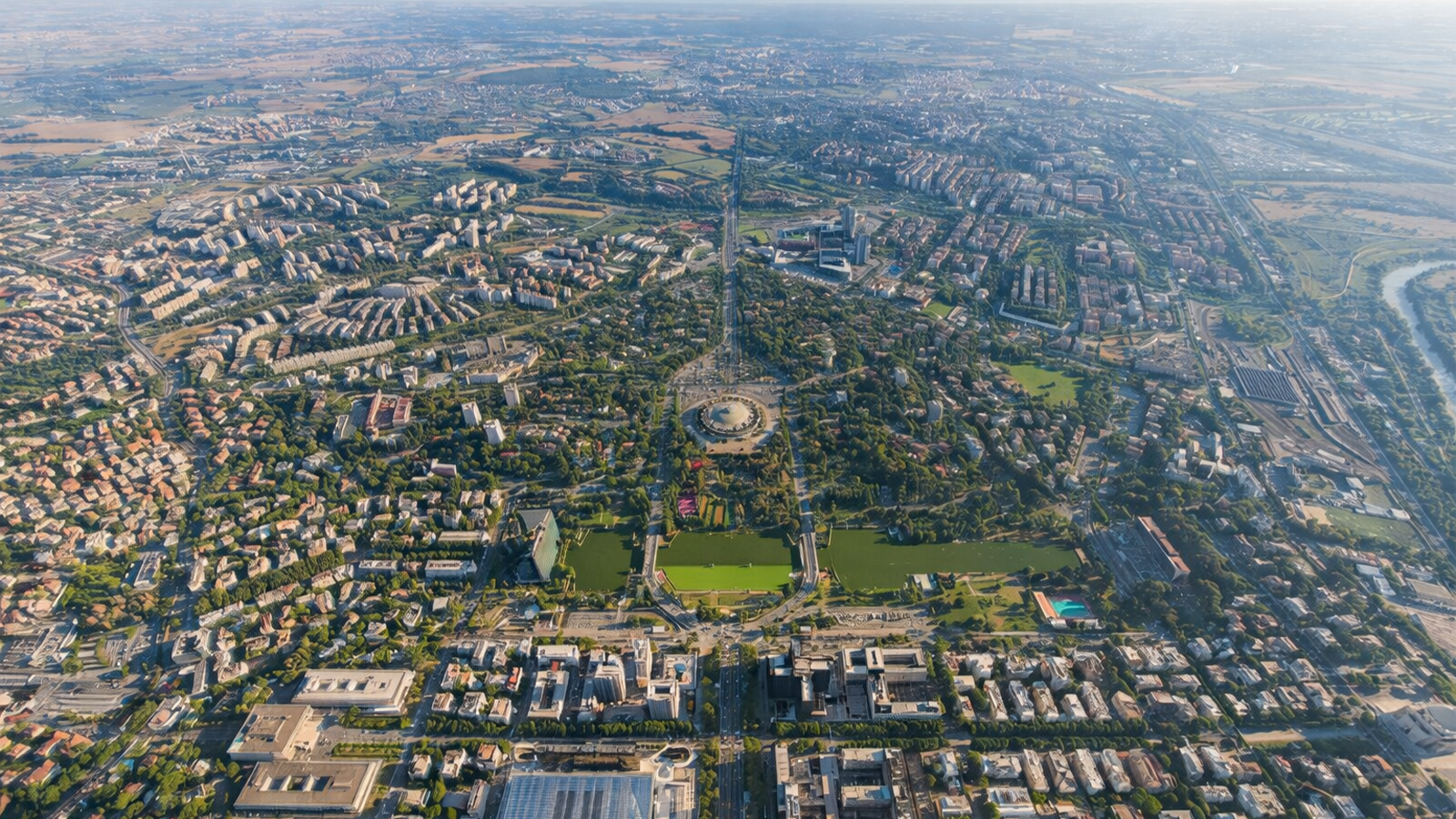

Rome is not just the Colosseum, the Trevi Fountain and the Spanish Steps. The Eternal City hides unexpected treasures even in its suburbs, places where millennial history and contemporary life intertwine to create unique atmospheres. Among these, Vitinia is an authentic discovery for those who want to go beyond the classic tourist routes.
Where Vitinia Is Located
Vitinia occupies a strategic position in Rome's urban fabric, situated in an area we could define as a hinge between the city and the coast. The neighborhood lies in the southern suburbs of Rome, along the route leading toward Ostia, roughly halfway between the beating heart of the capital and the beaches of the Lazio coast.
This particular location has always been an advantage for those who choose to live in or visit the area. On one side, Vitinia allows quick access to Rome's historic center with its monuments and cultural life. On the other, it offers fast access to Ostia's sea, perfect for those who want to alternate cultural visits with relaxing moments on the beach.
The public transportation network effectively connects Vitinia with both destinations. The Rome-Lido railway is the main artery, supplemented by several bus lines that serve the area thoroughly. This accessibility makes the neighborhood an ideal base for exploring Rome in a different way, avoiding the chaos of the center while maintaining all necessary connections.
A Journey into the Past: The History of Vitinia
Vitinia, originally known as "Risaro," has a rich history dating back to ancient times, closely tied to that of the city of Rome and its urban expansion.
Roman Origins: When It All Began
The history of Vitinia is rooted in the era of ancient Rome, when this area was part of the vast system of territories controlled by the eternal city. The Romans, with their legendary organizational ability, did not neglect this strategic area along the road to the sea.
Here the Romans built roads and aqueducts, leaving behind remains that offer glimpses of their ingenious architectural techniques. It is a delight for history enthusiasts to explore these ancient roots and gain a sense of the Roman influence that shaped the neighborhood.
Archaeological excavations carried out during the 20th century, particularly during the construction of modern infrastructure, brought extraordinary discoveries to light. The excavations carried out for the construction of Via del Mare and the railway line allowed the discovery of a vast necropolis, with late-antique mausoleums attributable to important figures.
These finds testify that the area was inhabited by wealthy families who chose this location to build their residences and burial sites. The mausoleums, with their imposing structures, tell stories of wealth, power and the complex social hierarchies of the imperial era.
From the Middle Ages to the Renaissance: Centuries of Transformation
Over time, the area where Vitinia is located underwent several transformations based on historical dynamics and the needs of the city of Rome.
The medieval period brought radical changes throughout the Roman area, and Vitinia was no exception. Indeed, in the Middle Ages, Vitinia underwent numerous changes both at the landscape and cultural and architectural levels. Ancient Roman structures were often abandoned, repurposed or dismantled, while new constructions rose according to the norms of the era.
The Roman countryside, of which Vitinia was a part, became a territory characterized by vast agricultural estates, fortified farmhouses and small rural settlements. The landscape changed profoundly: where patrician villas once stood, cultivated fields and pastures spread out.
During the Renaissance there was a true revival of arts and culture, and Vitinia began to flourish thanks in part to the construction of new palaces, churches and other architectural marvels. This period saw renewed interest in the organization of the territory and in the recovery of local traditions, laying the groundwork for subsequent urban development.
The Twentieth Century: From War to Rebirth
In the modern era, with the expansion of the city of Rome, the Fascist regime launched several development projects for Rome's suburbs, including the Vitinia neighborhood, which is in fact the oldest neighborhood in Rome among those that emerged in the post-war period.
World War II Fortifications
The Vitinia area preserves crucial evidence of the Second World War, tangible traces of one of the most dramatic periods in Italian history. Some historical evidence that can be found in Vitinia, along Via del Risaro, consists of reinforced concrete fortifications dating back to World War II.
The position of these bunkers was not random. They were placed there because that area was slightly above sea level and therefore would have been an excellent position for surveillance or for repelling a potential aggressor advancing toward Rome after landing at Ostia.
Furthermore, these fortifications played a very important role throughout history, because immediately after the armistice of September 8th the retreating Germans encountered heroic resistance from them, even though unfortunately the defenders did not prevail. This defensive line also served to protect the Rome-Lido railway network, considered strategic for wartime purposes, since a munitions factory existed in Ostia.
Today, walking along Via del Risaro, you can observe some of these structures, silent witnesses of dark days. They represent an important historical heritage that deserves to be preserved and known, because they tell stories of courage, sacrifice and resistance.
The Birth of the Modern Neighborhood
During the post-war period, the urbanization process continued, leading to the construction of new residential buildings and the establishment of an ever-growing community. All of Italy was living through a period of reconstruction and social transformation, and Rome was expanding its boundaries to accommodate new populations.
Vitinia thus became one of the first planned suburban neighborhoods of the capital. The constructions followed modern criteria for the time, with residential buildings equipped with services and infrastructure designed to create a self-sufficient community. Families settling here often came from other parts of Italy, attracted by the employment opportunities offered by the capital.
Only over time were shops and other commercial activities opened, but the most significant moment seems to have been the construction of the Sacro Cuore di Gesù Agonizzante church in 1955, which became a place of prayer and community gathering.
This religious building represented much more than a simple place of worship: it became the beating heart of the neighborhood's social life. Here weddings and baptisms were celebrated, patron festivals and recreational activities were organized, consolidating the sense of belonging to the community.
Vitinia Today: A Balance Between Past and Present
Vitinia is today a residential area with a combination of modern buildings and some historic elements, although many of the infrastructures and services found in the area have been developed over recent decades to meet the needs of the resident population.
Living in Vitinia: Services and Quality of Life
The neighborhood has evolved into a well-organized area where residents can count on all essential services. Supermarkets, pharmacies, medical offices, schools and sports centers dot the territory, making Vitinia a self-sufficient area for daily life.
It is a well-served area with every comfort, also thanks to public transportation such as buses and the Rome-Lido train, which allow easy travel from Vitinia to central Rome or to Ostia. The railway station is a key hub, with frequent services connecting the neighborhood to the main destinations of the capital and the coast.
Green spaces offer recreation areas for families and sports enthusiasts. Small parks and public gardens allow time outdoors without going too far from home, a luxury not always available in the more central areas of Rome.
The Unique Atmosphere of an Authentic Neighborhood
This harmonious blend of old and new creates a unique and vibrant atmosphere that distinguishes the Vitinia neighborhood.
Walking through the streets of Vitinia means immersing yourself in a different dimension compared to mass tourism. Here life flows at a more human pace, far from the frenzy of the historic center. Local bars and trattorias maintain an authentic character, places where neighborhood residents meet for a coffee or a home-style dinner.
Strolling through this area is like going back in time to an era of grandeur and elegance. This is not the monumental grandeur of the center, but the more intimate and everyday kind found in Rome's historic suburbs, where over the years people built a true community.
Why Visit Vitinia
This hidden gem in the eternal city is an ideal place to enjoy tranquility surrounded by nature and to take a break from the frenzy of the city center.
For those traveling to Rome with more time, spending a few hours in Vitinia can be an enriching experience. The neighborhood offers a glimpse of real Rome, the one that lives daily away from the tourist spotlight. Here you can observe how Romans actually live, in their residential neighborhoods, away from the main attractions.
Military history enthusiasts will find the World War II fortifications particularly interesting, rare and well-preserved evidence of a crucial period. Archaeology lovers can instead imagine how the area must have looked in the Roman era, when necropolises and mausoleums characterized the landscape, similar to those of the nearby Ostia Antica archaeological park.
Even those simply looking for a moment of relaxation will appreciate the quiet atmosphere of the neighborhood. Sitting in one of the local bars, watching life go by, chatting with residents: these are small experiences that allow you to truly connect with a city, going beyond its tourist surface.
Practical Tips for Your Visit
If you decide to include Vitinia in your Rome itinerary, here are some useful suggestions. The best time to visit the neighborhood is during the morning or late afternoon, when temperatures are milder and the light creates special atmospheres.
Bring comfortable shoes: exploring Vitinia means walking through its streets, perhaps venturing off the main roads to discover lesser-known corners. A camera can be useful for capturing the historic fortifications and the characteristic views of the neighborhood.
If you have time, consider stopping for lunch at one of the local trattorias. The food will be genuine and the prices considerably more affordable than in the center. It is also an excellent opportunity to chat with locals and hear anecdotes about the neighborhood. To discover the best authentic restaurants in Rome, check out our guide curated by local experts.
To reach Vitinia from central Rome, the most practical solution is to use the Rome-Lido railway. The journey takes about 30 minutes and will allow you to observe the gradual change in the urban landscape, from the density of the center to the more open dimension of the suburbs. For a more complete experience, consider joining one of our guided tours of Rome.